

Businesses have always sold things - a widget, a service, a momentary exchange of money for value. But in a market crowded with similar features and interchangeable price points, the real advantage now belongs to those who sell change: the shift in someone’s life, business, or work that endures. Selling transformation means swapping a receipt for a roadmap, a fleeting transaction for a sustained outcome.
This is not a pitch for soft promises or vague visions.It’s a practical reorientation: define the meaningful end-state your product enables, design every touchpoint around progress toward that end, and measure success by the customer’s improved condition rather than the immediacy of a sale. When customers buy a transformation, they commit differently – they invest time, attention, and loyalty – and the seller’s role becomes less about closing deals and more about guiding journeys.
In the pages that follow we’ll examine what it takes to make that shift: mindset, messaging, proof, and the operational changes that turn offers into pathways. Whether you’re a founder, marketer, or frontline salesperson, learning to sell transformation rather than transactions changes not just what you sell, but how you build value.
Shift the Conversation from Features to the Customer’s Future Self
Don’t sell them a tool – sell them a tomorrow. Start by sketching the life your customer wakes up to after adopting your solution: less friction, more time, clearer outcomes. Rather than reciting specs, paint a snapshot – the emails ignored, the meetings reclaimed, the week where deadlines feel manageable. Use short, concrete vignettes that let buyers see themselves in the scene; a tiny narrative shift turns “500ms faster” into “an extra hour for strategy every Monday.”
- Less time firefighting, more time planning
- A team that trusts the process, not the workarounds
- metrics that translate into weekends back
Translate that vision into conversation starters and proof points. Lead with questions that prompt a future-oriented answer, then anchor claims with relatable outcomes: testimonials framed as “6 months after…” or case bullets that tie features to daily wins. Focus on what changes, not what it costs – and be ready to show the math of improved days, not just improved KPIs.
- ask: “How will your day look in 90 days?”
- Show: before/after moments, not spec sheets
- Measure: time recovered, stress reduced, revenue enabled
Map the Transformation Journey and Remove Points of Friction

Think of the customer’s path as a map, not a checklist: sketch the emotional terrain, the decision points and the tiny victories that signal real progress. Start by plotting stages (awareness → evaluation → activation → mastery) and overlay both quantitative signals and human stories – clicks, calls, hesitations, and delight. Use a simple checklist to spot the choke points:
- First contact – clarity and expectation-setting
- Onboarding – time to first value
- Adoption – ongoing support and reinforcement
- Expansion – proof of ROI and next-step offers
Mapping this way turns vague complaints into targeted hypotheses you can test.
Once the journey is visible, remove friction like a landscape gardener trims overgrowth – surgically and with purpose. Prioritize fixes that reduce cognitive load and accelerate outcomes: shorten forms, automate repetitive handoffs, and build playbooks that convert confusion into confidence. Quick, high-impact interventions frequently enough look like:
- Simplify - one fewer decision at a time
- Automate – handoffs that happen without a human delay
- Measure – track time-to-value and customer effort
These changes make the transformation tangible and position your offering as the pathway, not just a purchase.
Design Offers Around Outcomes and Milestones Rather than Price

package your services as a chain of tangible checkpoints and measurable results so clients buy certainty, not a spreadsheet. Use brief, outcome-focused language to describe what changes at each step and who benefits. Make the commercial logic obvious by tying payments to progress and value delivered – this reduces objections and aligns incentives. Examples of clear checkpoints to include in a brief proposal:
- Discovery – validated problem statement and success metrics;
- Prototype – clickable demo or pilot with user feedback;
- Implementation – production release meeting SLA targets;
- Adoption – usage and retention thresholds or NPS goals.
Create simple, milestone-triggered payment terms that reflect risk-sharing and reward impact. Below is a compact example you can adapt for most transformation offers; it turns abstract value into concrete checkpoints and payment triggers so conversations focus on impact, not hourly rates.
| Checkpoint | Measurable Result | Payment Trigger |
|---|---|---|
| Prototype | Validated demo with 10 user tests | 30% on sign-off |
| Launch | Live system, 99% uptime for 30 days | 50% on go-live |
| Adoption | Active users ≥ target & NPS ≥ 30 | 20% + success fee |
Frame proposals in terms of improvement and shared risk so price becomes an investment toward a measurable future, not a line item to negotiate.
Use Compelling Stories and Quantified Proof to Make Change Tangible
Tell one vivid narrative that makes the outcome feel real: paint the customer as a protagonist, outline the obstacle they faced, and show the moment of change. Pair that arc with crisp numbers so the imagination is anchored to reality – for example, reduced churn 42%, time-to-value cut in half, or revenue per user up 2.8×. Use short, focused elements to keep the story sharp and believable:
• Who they are – persona and context
• What was broken – the exact pain or metric that mattered
• How the solution altered that metric – the measurable result
When people can picture the before and after and read the exact numbers, change stops being abstract.Anchor every anecdote to a simple proof point – a percentage,a dollar value,a time saved – and surface the source: customer quote,anonymized dashboard screenshot,or a short case summary. Make those proof points easy to scan so prospects can map the transformation to their own situation:
• Case study: 90-day sprint, 3 tangible KPIs improved
• Testimonial: named outcome + context
• Snapshot: before/after metric in one line
Create Support Systems that Sustain new Behaviors and Reduce Drop Off

Think of transformation as a long walk, not a single doorway – the path needs handrails, lamps and signs. Build scaffolding that nudges people forward with micro-commitments, visible progress markers and simple rituals that require so little friction they become automatic. Combine human touch (peer groups, coaches) with smart automation (timed nudges, check-ins) so new actions are reinforced before old habits reclaim the space.
- Onboarding checklist: a short, clear first-week playbook that removes decision fatigue.
- Weekly checkpoints: lightweight reviews that turn intention into tracking and small wins.
- Accountability pods: peer pairs or triads that increase follow-through through social expectation.
- Automated nudges: contextual reminders that show up when motivation dips.
- Progress dashboard: a simple visual of momentum, not perfection, to celebrate movement.
Sustainability comes from designing environments that make the new choice the easy choice: default options,visible cues and rituals that align with someone’s desired identity. Measure early, iterate often and build re-engagement loops – short, low-barrier ways to re-enter the program after a lapse – because reducing dropout isn’t about pressure, it’s about predictable returns to behavior. Over time,these systems convert one-off purchases into lasting transformation by making the next right step clearer than the cozy old habit.
Measure Impact Continuously and Communicate Long Term Value
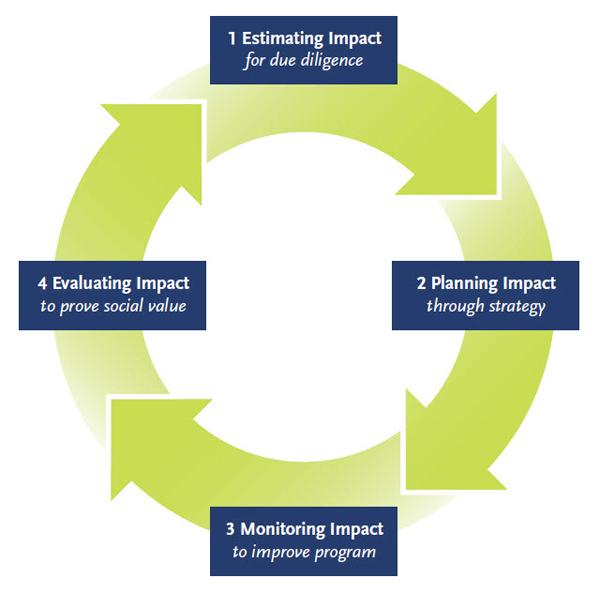
Measure, then make the measurement sing.Start by instrumenting the change: capture baselines, define a small set of leading indicators alongside long-term outcomes, and build dashboards that turn raw telemetry into narrative. Use these signals to iterate-experiment, learn, and tune-so your work accumulates measurable improvement rather than one-off wins. quantify value in time, risk reduction, and capability uplift, not just in one-off invoices; that shift in metric focus is where transformation wins become obvious.
Practical habits turn measurement into a sale:
- Weekly pulses for teams – short, data-driven check-ins that surface momentum.
- Monthly value sprints – map wins to stakeholder outcomes and update forecasts.
- Quarterly narratives – translate metrics into business stories that executives share.
- Continuous ROI models – keep projections live so trade-offs become transparent.
Communicate these rhythms with clear visuals and stakeholder-focused language so the conversation shifts from “what did we buy?” to “what have we built together?” – and the sale becomes an ongoing partnership built on demonstrable, growing value.
Final Thoughts
To sell transformation, not transactions, is to change the question you ask at every touchpoint: not ”Can I close this deal?” but “Can I change a life, a team, a business?” That small shift reframes every conversation, reorients your metrics, and redraws the map of what success looks like.Doing it takes more than rhetoric. It requires empathy to understand the true problem, courage to design for long-term outcomes, and discipline to measure impact rather than receipts. It asks you to build structures-pricing, onboarding, follow-up, and culture-that reward sustained value over immediate volume.
Start small: listen more than you pitch; prototype solutions with customers, not for them; and make measurement as simple and visible as possible so that transformation becomes tangible. Over time, those habits compound into credibility, referrals, and resilience that a single transaction can never buy.
The real work is less about persuading someone to hand over money and more about earning the right to change how they think and act.If you succeed, you won’t just close deals-you’ll change trajectories.