

Like a river that redraws its course around an unexpected boulder, the most resilient companies do not fight change - they flow with it. In an era defined by technological upheaval, shifting consumer values, and supply chains that can kink overnight, adaptability is less a slogan than a survival skill. Future-proof businesses treat flexibility not as a contingency plan but as a core operating principle: a way to sense disruption early, reconfigure resources quickly, and continue delivering value when the map changes.
This article explores why adaptability has moved from a nice-to-have trait to the central bet of long-lived organizations. We will look beyond buzzwords to show how adaptive companies rewire decision-making, organize teams, and align incentives so that learning and iteration replace rigid forecasts. You’ll encounter practical patterns-modular product design, scenario planning, responsive leadership-that make adaptation repeatable rather than accidental.
Read on to discover how betting on adaptability alters the calculus of risk and chance, and why leaders who embrace change thoughtfully are more likely to turn uncertainty into advantage. Whether you’re steering a startup or retooling an established enterprise, understanding these principles helps you prepare not just to survive the next disruption, but to make it a stepping stone.
Make Strategic Flexibility a Boardroom Priority with Scenario Planning and Adaptive KPIs
boards that treat rigidity as a risk give themselves room to breathe when markets twist. By rehearsing a handful of plausible futures through scenario planning, directors convert anxiety into actionable options: what to defend, what to delay, and what to double down on.Build this muscle by defining scenario triggers and pairing each with KPI families that can flex (targets become ranges, not absolutes).Keep the practice pragmatic with a short checklist:
- Trigger definitions: clear, measurable events that flip a strategic switch
- Adaptive KPIs: lead/lag pairs and range-based goals
- Review cadence: quarterly scenario refresh, monthly signal checks
- Delegated authority: pre-approved moves for rapid response
This structure helps transform the boardroom from a place of forecasts into a control center that favors options over predictions.
Operationalizing flexibility means wiring it into governance, resourcing and reporting so responses are fast and proportionate.Create dashboards that surface scenario-state, KPI drift, and contingency levers at a glance; align budgets to the scenarios with small, reserve pools for opportunistic moves. Below is a simple reference mapping to get started:
| KPI | Trigger | Immediate Board-Approved Response |
|---|---|---|
| Customer Churn Rate | +3% month-over-month | Activate retention squad; release 10% promotional fund |
| Supply lead Time | +25% vs baseline | Shift to alternate supplier; increase safety stock |
| Cash runway | <9 months | Pause non-essential projects; initiate cost renegotiation |
With these mechanisms, the board’s role evolves into stewarding optionality-measuring not only where the company is, but where it can quickly pivot to thrive.
Design Modular Operations and Technology for Rapid Reconfiguration Using APIs and Plug and Play Processes
Treat your technology stack like a set of building blocks: swap, upgrade, or scale pieces without tearing down the whole house. by prioritizing composable components,contract-first APIs and clear data schemas,teams can spin up new features,route around failures,and test experiments in hours rather of months. Practical patterns to bake into operations include:
- Loose coupling between services to minimize blast radius
- Observable interfaces that make behavior predictable
- Automated orchestration for instant reconfiguration
Focusing on these elements turns adaptation from a risky project into a predictable capability.
Measure adaptability with small, actionable metrics that guide investment. The simple table below shows how plug-and-play modules shorten deployment cycles and reduce coordination overhead-use it as a conversation starter when planning your next sprint.
| Module | Typical Deploy Time | primary Benefit |
|---|---|---|
| Auth Service | 1-2 hours | Faster customer onboarding |
| Payments Adapter | 1 day | Multiple gateway support |
| Analytics Hook | 30 minutes | Immediate feedback loop |
Use these short cycles to iterate: small wins compound into sustained resilience and a culture that expects change,not fears it.
Build Cross Functional Teams and Rotational Programs to Speed Decision Making and Institutionalize Diverse Perspectives
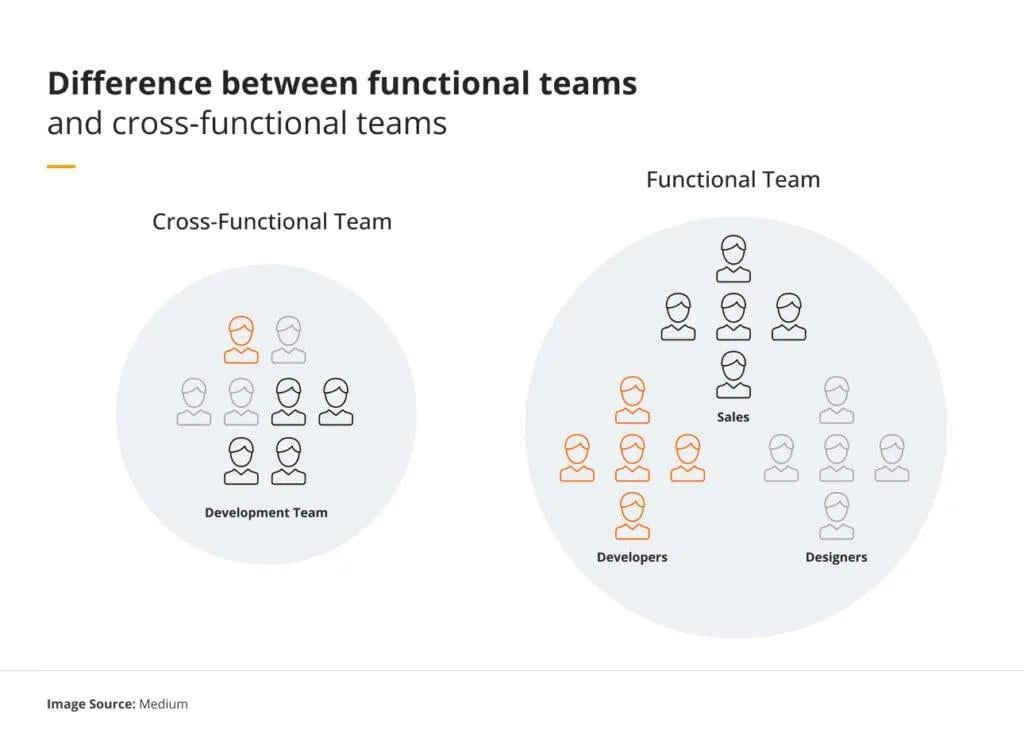
When teams are built around problems instead of functions, choices get made with speed and context. Create small, empowered pods that include product, engineering, design, data and customer-facing roles so trade-offs are visible at the moment of decision, not discovered after the handoff. Embed lightweight rules – clear decision rights, a “48-hour” rapid-response cadence, and a public backlog – so autonomy scales without chaos.
- Faster outcomes: fewer approval bottlenecks and quicker market feedback.
- Richer solutions: problems reframed through multiple lenses in real time.
- Shared ownership: accountability spreads across disciplines,reducing blame and improving follow-through.
Rotate people through roles and projects deliberately to make diverse perspectives part of the company’s DNA rather than an annual poster campaign. Short-term swaps,customer-immersion weeks and cross-department apprenticeships build empathy,surface hidden constraints and create a pipeline of people who can both execute and translate across teams.
- Rotation types: product↔engineering, support↔sales, analytics↔ops.
- Institutional gains: faster onboarding for complex roles and a deeper leadership bench.
- Measure what matters: track decision velocity,retention of rotated talent and cross-skill coverage to prove the programme’s ROI.
Use Small Fast experiments to Reduce Innovation Risk and Measure Learning with Clear Metrics and Feedback Loops

Think of innovation as a weather vane, not a monument: short, purposeful trials shift direction quickly without committing the company to a risky, unproven architecture. run small, timeboxed experiments that test a single assumption, capture the signal you need, and then fold that learning into the next iteration. By keeping investments modest and outcomes measurable, teams can transform unknowns into data points-reducing downside while increasing optionality. The secret is designing each trial around a clear success criterion and a rapid feedback loop so decisions are based on learning, not hope.
Operationalize learning with a simple cadence: hypothesize, measure, decide, repeat. Practical tactics include:
- Hypothesis-first: state what you expect and why.
- One metric: pick a primary metric that maps to customer value.
- Short timebox: 1-6 weeks to surface signals fast.
- Clear pivot rules: predefine when to persevere, pivot, or kill.
| Experiment | Primary Metric | Timebox |
|---|---|---|
| pricing A/B | Conversion Rate | 2 weeks |
| Onboarding Variation | Activation Rate | 3 weeks |
| New Feature Pilot | DAU Uplift | 4 weeks |
Align Talent Systems and Incentives to Reward Adaptability with Promotion Pathways and Continuous Development Funding

Companies that survive and thrive reshape how they measure and reward people: instead of only valuing yesterday’s outputs, they pay for learning velocity, cross‑team moves and visible curiosity. Embed incentives into everyday systems – from performance reviews to bonus formulas – so that taking on a stretch assignment or sharing a failed experiment earns the same recognition as hitting a quarter‑end target. Practical levers include:
- Stretch assignments that count toward promotion timelines.
- Learning stipends tied to measurable skill gains (not just course completion).
- Internal mobility credits that reward cross‑functional experience.
- “Fail forward” bonuses to signal safe risk‑taking.
Design clear, fast routes for growth that make adaptability a visible career advantage: short micro‑promotion steps, competency badges that unlock role responsibilities, and a continuous development fund earmarked per headcount. Below is a simple matrix you can repurpose to align funding and promotion signals with adaptability outcomes:
| Career Stage | Adaptability Signal | Annual Dev Fund |
|---|---|---|
| Associate | Cross‑team rotation completed | $1,200 |
| Senior | Led a product pivot or major experiment | $2,500 |
| Lead | Mentored 3 mobility hires; drove process change | $4,000 |
Forge Resilient Partnerships and ecosystems through Shared Platforms data Agreements and Joint Contingency Plans
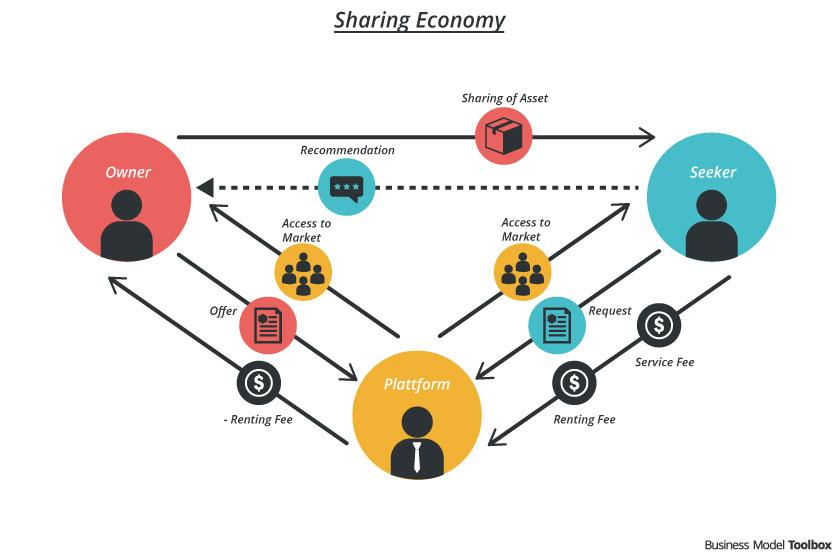
In a world where supply chains and customer expectations shift overnight,businesses that embrace shared platforms and clear data agreements turn uncertainty into an advantage. By knitting together interoperable systems and transparent governance, partners can swap context, not just files - accelerating decisions and reducing duplicate work. Shared APIs, mutual audit windows, and purpose-bound consent models create a tidy scaffolding for collaboration, while a culture of reciprocal accountability keeps the ecosystem honest and nimble.
- Common language: standardized data schemas and SLAs
- Trust anchors: audit logs, encryption and role-based access
- Governance loops: joint review cycles and change-control boards
Resilience isn’t an insurance policy - it’s choreography. When partners predefine triggers, responsibilities and failover routes, recovery becomes a practiced response rather than a panicked scramble.Regular tabletop exercises, shared contingency toolkits and agreed escalation trees ensure that every actor in the ecosystem knows the next step, preserving reputation and revenue while the disruption fades. The companies that thrive treat contingency planning as a living asset: versioned,tested and woven into commercial terms.
- Playbooks: concise step-by-step recovery actions
- Drills: quarterly simulations with cross-organizational observers
- Mutual aid: pre-negotiated resource swaps and temporary capacity pledges
Closing Remarks
The future will not arrive as a single event but as a succession of small shifts - market ripples, tech currents, customer moods – that together reshape the landscape. Businesses that invest in sensing those shifts, experimenting with responsive designs, and reorganizing around learning and speed will be better placed to navigate whatever comes next.
Think of adaptability less as a one-off upgrade and more as the company’s operating climate: a compass more than a blueprint,a riverbed that guides flow instead of a dam that resists it. That posture turns uncertainty from a threat into a set of directions worth exploring.
In practice this means building feedback loops, empowering teams to act on fresh information, and treating strategy as iterative. For leaders, the question is no longer whether change will come, but how quickly the organization can learn from it and move on that learning. In that quiet, continuous readiness lies the practical resilience of a future-proof business.