


AI vs. Creativity: The Final Battle for Human Innovation
in an era marked by rapid technological advancement, the boundaries between human creativity and artificial intelligence are increasingly blurred. As algorithms learn to compose symphonies, craft vivid narratives, and design stunning visuals, a pressing question arises: can machines rival the boundless imagination of the human mind? This article delves into the intricate dance between AI and creativity, exploring not just the capabilities of machines, but also the profound spark of human innovation that has driven progress throughout history. We will navigate the triumphs and challenges faced by both realms, shedding light on the potential coexistence that may redefine the future of creativity.Join us as we embark on this exploration of artistry and intellect, posing the ultimate question—what is the true essence of creativity in a world where the lines are constantly being redrawn?
The Intersection of Algorithms and Imagination

In a world increasingly dominated by data-driven decisions, the true battleground lies at the crossroads of algorithms and imagination. While algorithms analyze patterns and predict outcomes, imagination allows us to dream beyond the known parameters. This dynamic duo offers immense potential for innovation, enabling us to not only solve complex problems but to push the boundaries of art, science, and technology. The fusion of these two forces can lead to remarkable advancements, allowing AI to assist but not overshadow the human spirit’s creative pursuits.
The challenge lies in redefining creativity in an age where machine learning can produce art and literature that evokes genuine emotion. Consider the following aspects that define this intersection:
- Innovation: AI can augment human creativity by suggesting ideas or generating new concepts.
- Collaboration: Human intuition paired with algorithmic computation can result in unexpected and groundbreaking solutions.
- Experimentation: AI tools can facilitate more daring artistic explorations without the fear of immediate failure.
As we navigate this uncharted territory, it is essential to remember that while algorithms can enhance creative efforts, they do not replace the unique human touch that drives truly original ideas.
Understanding the Creative Process in the Age of AI
The creative process has evolved significantly with the advent of artificial intelligence, prompting a re-evaluation of what it means to create. traditionally, creativity has been viewed as an inherently human trait—a product of emotion, experience, and intuition. However, AI introduces a new dimension to this concept, blurring the lines between human ingenuity and machine-generated content. While AI can analyze vast datasets, generate ideas, and even mimic artistic styles, its lack of genuine experience poses questions about the authenticity of its creativity.This intersection invites us to consider how technology can augment rather than replace human imagination, transforming our approach to innovation in fields such as art, music, and writing.
As we navigate this complex landscape, it becomes crucial to recognize that the creative process remains a deeply personal journey, even in the age of AI. Humans bring context, emotion, and cultural understanding to their work, enriching the creative output with layers of meaning that machines cannot replicate. This interplay between human and AI contributions offers exciting possibilities for collaboration. For example:
- Enhanced Ideation: AI tools can assist in brainstorming sessions, providing new angles and perspectives.
- Personalization: AI can analyze audience preferences to tailor creative efforts that resonate more effectively.
- prototyping: AI can rapidly generate variations, allowing creators to iterate more efficiently.
Ultimately, understanding the creative process in the context of AI challenges us to redefine innovation. The partnership between human creativity and artificial intelligence could lead to groundbreaking advancements, reinforcing the notion that while AI might potentially be capable of generating content, the soul of creativity—the depth of human experience—remains irreplaceable, guiding the creative landscape into the future.
Redefining Inspiration: How Technology Transforms Artistic Expression
In the contemporary arts landscape, technology is forging new paths for creativity, pushing the boundaries of traditional expression. Artists are harnessing tools such as AI-driven software, virtual reality, and digital platforms to explore realms previously unimaginable. With each innovation, the relationship between artistic vision and technical capabilities becomes more intertwined, leading to a renaissance of forms and mediums. Technology empowers creators to:
- Experiment boldly – Embracing unconventional methods to spawn unique ideas.
- Collaborate Globally - Breaking geographical barriers to unite artists in shared visions.
- Engage Audiences interactively – Creating immersive experiences that invite participation.
- Analyze Trends – Utilizing data to predict and adapt to cultural shifts in real time.
While fears of dilution in the quality of creativity linger, technology emerges as a tool that augments rather than replaces the human element in art. Rather than erasing the artist’s touch, AI can serve as a collaborator, honing skills and providing inspiration alongside the artist’s intuition. The interaction between human creativity and sophisticated algorithms opens doors to a new variety of artistic expressions, offering a fresh canvas for visionary thinkers. A glance at the conversion can be summarized as follows:
| Traditional Art | Technologically Enhanced Art |
|---|---|
| Static mediums | Dynamic installations |
| Individualistic vision | Collaborative projects |
| Physical limitations | Limitless possibilities |
| Passive audience | Active participation |
Collaborative Futures: Humans and Machines as Co-creators
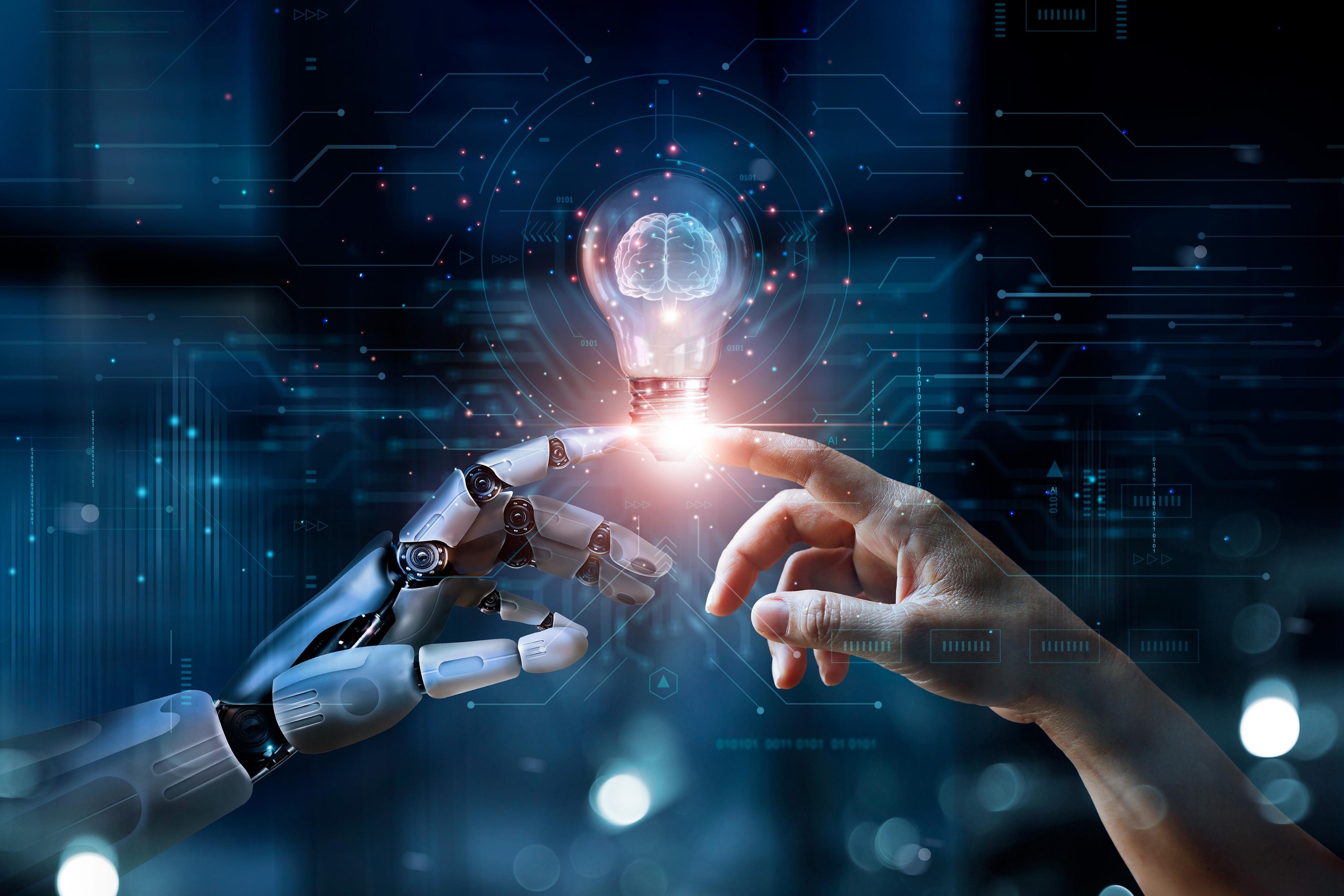
The dynamic interplay between humans and machines is redefining the landscape of creativity. As we delve into collaborative futures, we find ourselves at the intersection where human ingenuity meets artificial intelligence. Rather than viewing machines as mere tools, we can embrace them as partners in the creative process. This partnership opens up exciting avenues where innovative ideas blossom from the synergy of human emotion and machine efficiency.Consider the following benefits of this collaboration:
- enhanced Creativity: Machines can analyze vast datasets to inspire new ideas.
- Workflow Optimization: AI streamlines repetitive tasks, allowing humans to focus on creative pursuits.
- Diverse Perspectives: Algorithms can introduce unexpected combinations and help break creative blocks.
To further illustrate the potential of this harmonious relationship, envision a creation process where artists and engineers team up with AI technologies. The possibilities range from art installations powered by machine learning to music compositions that integrate human emotions with algorithms designed to simulate musical theory. Below is a brief overview of potential collaborative projects:
| Project Type | Description | Collaborative Elements |
|---|---|---|
| Art Installations | Interactive exhibits that respond to viewer emotions. | Artists + AI-driven sensors |
| Music Composition | Songs created through human input and AI suggestion. | Musicians + AI algorithms |
| Literary Works | Narratives co-written by humans and AI. | Writers + Natural Language Processing |
Preserving Authenticity: Balancing Innovation with Human Touch
In the era of artificial intelligence, the definition of creativity is evolving. Innovation is a powerful tool that can significantly enhance our creative processes,yet there remains an undeniable need for the human touch. When we harness technology, we must prioritize preserving the essence of what makes creative expression fundamentally human. The intricacies of emotion, personal experience, and unique viewpoint cannot be replicated by algorithms. Striking a harmonious balance between AI capabilities and human ingenuity ensures that while we explore new frontiers of creativity, we don’t lose the authenticity that defines our individual and collective narratives.
To facilitate this balance, we can adopt the following practices:
- Emphasize Collaboration: Encourage partnerships between AI tools and human creators to expand horizons.
- Foster Clarity: Be clear about when and how AI is being used in the creative process.
- Prioritize Emotion: Remember that human emotion drives powerful stories and innovations.
| Aspect | AI Contribution | Human Element |
|---|---|---|
| Idea Generation | Data-driven insights | Emotional depth |
| Execution | Efficiency and speed | Artistic touch |
| Feedback | Quantitative analysis | Subjective interpretation |
Strategies for Embracing AI while Fostering Original Thought
In a world increasingly shaped by technology, embracing AI doesn’t meen letting it eclipse our innate creativity. Rather,we can leverage specific strategies to harmonize these two realms,ensuring that our original thoughts thrive alongside automated processes. Here are some effective strategies:
- Collaborative Creation: Use AI tools as partners in the creative process rather than as replacements. Engage in iterative feedback loops where AI generates ideas based on initial human concepts, resulting in a synergy that amplifies both human intuition and machine efficiency.
- Curative Curation: Curate content using AI to engage audiences while maintaining a human touch. Use algorithms to analyze what resonates with your audience, then infuse your unique voice and perspective into the final product.
Moreover, fostering a culture of innovation requires intentional efforts to nurture original thought even in an AI-rich environment.Emphasizing education around both AI capabilities and creative thinking will prepare individuals to find balance in their work processes. Consider integrating these approaches:
- Exploratory Workshops: Organize sessions where teams can experiment with AI tools, encouraging creative risk-taking and open-minded ideation.
- Diverse Perspectives: Encourage collaboration among individuals with varying skills and backgrounds to spark unique ideas that AI cannot replicate.
Q&A
Q&A: AI vs. Creativity – The Final Battle for human Innovation
Q1: What is the central thesis of the article “AI vs. Creativity: The Final Battle for Human Innovation”?
A1: The central thesis explores the evolving relationship between artificial intelligence and human creativity, questioning whether AI can enhance or overshadow the innate creative capabilities of individuals. It examines how AI serves as a tool for innovation while simultaneously pondering the implications of its presence on human artistry and originality.
Q2: In what ways can AI assist in the creative process?
A2: AI can assist creativity in numerous ways, including generating ideas, enhancing design processes, and even composing music. Tools like generative algorithms and machine learning models can analyze trends, suggest variations, and simulate complex scenarios, providing creators with fresh perspectives or sparking inspiration that may not have emerged in a traditional human-only environment.
Q3: are there specific examples of AI driving human innovation?
A3: Yes, there are many examples. For instance, AI has been pivotal in industries like film and music, where algorithms analyze audience preferences to tailor content.In fashion, designers use AI to predict trends by analyzing vast datasets. Moreover,artists like Janelle Monáe and Refik Anadol incorporate AI in their works,merging technology and artistry to push creative boundaries.
Q4: What are the potential downsides of relying on AI for creative endeavors?
A4: One potential downside is the risk of homogenization, where AI-generated outputs might lead to a lack of diversity in creative expressions. Additionally, there’s concern over the originality of works produced with AI’s help, as they may borrow from existing styles rather than innovate. This raises questions about authenticity and the essence of human expression in art and design.
Q5: How can humans maintain their creative edge in the face of AI advancement?
A5: Humans can maintain their creative edge by embracing a synergistic approach, using AI as a collaborative partner rather than a replacement. Fostering environments that prioritize critical thinking, emotional intelligence, and uniquely human experiences can enhance innovation. Continuous learning and adaptability will enable creators to harness AI’s capabilities while cultivating their own distinctive voices.
Q6: Does AI’s role in creativity signal the end of traditional artistic practices?
A6: Not necessarily. While AI introduces new techniques and possibilities, traditional artistic practices continue to hold notable value. Many artists find ways to integrate AI into their traditional mediums, enriching their work rather than discarding it. The intersection of technology and art can expand horizons,rather than enforce a binary choice between old and new.
Q7: What does the future hold for the relationship between AI and creativity?
A7: The future appears to suggest a complex partnership between AI and human creativity, where innovation flourishes through collaboration. As AI continues to evolve, it may redefine the boundaries of creativity, but it’s likely that human insight, emotion, and experience will remain irreplaceable catalysts for true artistic expression. The ongoing dialog between the two signals more exploration and revelation ahead, forming a new paradigm for innovation.
In the “final Battle for Human Innovation,” it truly seems neither AI nor human creativity is destined to ‘win’—rather, they may co-create a future laden with limitless possibilities.
Wrapping Up
As we stand on the precipice of an unprecedented era, where artificial intelligence and human creativity intertwine, the implications of this coexistence unfold like the pages of a captivating narrative. The symbiotic relationship between our innate imaginative instincts and the analytical prowess of AI invites us to reconsider the very essence of innovation. While the algorithms churn data and generate insights at lightning speed, it is our human touch—the emotional resonance, the unique perspectives, and the capacity for empathy—that ultimately fuels true creativity.
in this final battle for supremacy in innovation, it becomes clear that the outcome is not a zero-sum game. instead, it is a collaborative dance, where each partner brings invaluable strengths to the floor. As we navigate this complex terrain, it is vital to embrace the fusion of technology and creativity, recognizing that the future of innovation lies not in competition, but in cooperation.
the road ahead is filled with possibilities, and as we embark on this journey, let us remain open to the unexpected synergies that await us. After all, creativity is not just a human trait; it is a beacon for progress. In this evolving landscape, may we harness the power of both AI and our innate creativity to craft a future that is richer, more vibrant, and undeniably human.