
Across industries, the market landscape is littered with skyscrapers-long-established brands whose size and scale seem immovable. Yet in the shadows of those towers, smaller, leaner companies are quietly chipping away at foundations once thought unassailable. This is not a matter of lightning strikes or lucky breaks; it is a study in tactics,timing and a willingness to rethink the rules of competition.
Challenger brands win not by matching giants blow for blow, but by exploiting gaps giants leave open: by being faster to adapt, clearer in storytelling, smarter at targeting overlooked customers, and more experimental with business models. They turn constraint into creativity, turning niche relevance into broader momentum.In doing so they force incumbents to defend territory not only on price or scale,but on attention,meaning and trust.
This article will unpack how challengers identify vulnerabilities, mobilize resources, and convert small gains into lasting market share. We’ll examine the strategies they deploy-product differentiation, distribution innovation, community-building and digital-first tactics-and consider why these approaches succeed where brute force alone would fail. The aim is to understand the mechanics behind modern market disruption, without myth or melodrama, so leaders of any size can learn what to guard against or emulate.
Pinpoint under-served customer needs and craft a laser focused value proposition

Look at where the market’s giant players get lazy: coarse segments, clunky processes, and assumptions that “good enough” still sells. Start by mining moments of frustration - the tiny interruptions that add up – and turn them into chance. Use fast,low-cost techniques to surface those gaps:
- Micro-interviews – five questions,five customers,repeated weekly to spot recurring gripes.
- Friction mapping – trace a customer task step-by-step and mark the points where they abandon or improvise.
- Shadow sessions - watch real users for 30 minutes and note workarounds they never report.
these signals reveal not just pain but desire: the tiny, specific benefit people would pay to secure. Capture it in language that sounds like the customer thought it up themselves.
Now transform that insight into a compact promise and test it relentlessly.Focus on a single, defensible benefit, pair it with quick social proof and a low-friction hook, and refine until conversion moves. A simple cheat-sheet helps teams stay aligned:
| Proposition element | Example |
|---|---|
| Core promise | Cut admin time by 40% |
| Proof | Rated 4.8 by 2,100 managers |
| Trigger | Start in 60 seconds, free 14 days |
Keep the wording tight, test the claim in one channel, and iterate until the smallest tweak lifts adoption. The giants sell global certainty; challengers win with precise, irresistible relief.
Outlearn slow incumbents with rapid experimentation and data driven iteration
Move faster than legacy decision cycles by treating every hypothesis as a customer-facing experiment: small, measurable, and disposable. Turn landing pages, onboarding flows and pricing prompts into rapid tests that answer one question at a time – then close the loop within days, not quarters. When you prize learning over perfection, tiny wins compound: a 3% uplift across multiple touchpoints quickly outpaces a single big initiative governed by slow committees. Use lightweight instrumentation, cadence-based reviews and clear success criteria so iterations are driven by real user signals rather than opinion or precedent.
Design a playbook of repeatable, low-cost experiments and let data decide what scales.Prioritize ideas by expected signal, implementation effort and downstream impact, then run them in short cycles to conserve runway while enlarging your evidence base. Typical experiments include:
- Split-test headlines and value props on paid channels
- micro-variants of onboarding flows to reduce time-to-first-value
- Small price/pack variations with cohort tracking
- Early-access features to high-intent segments
Over time this rhythmic,evidence-first approach creates a learning machine – one that uncovers edges incumbents miss as they’re too busy protecting last quarter’s playbook.
Build a memorable brand personality that converts early adopters into vocal advocates
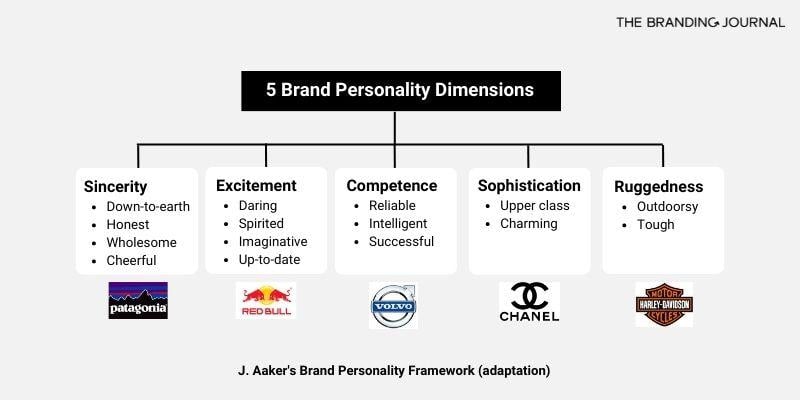
Treat your brand like a person people want to spend time with: approachable enough to be trusted, opinionated enough to be remembered. Early adopters latch onto clarity and character, not vague promises-so choose a few defining traits and amplify them. Build rituals and language they can repeat, and lean into imperfections that feel human rather than corporate polish. Consistency turns quirks into recognizability; generosity turns recognition into loyalty.
Give those first fans reasons to speak up: roles,rewards,and rituals that make advocacy easy and enjoyable. Use small, repeatable actions to spark big social behavior-exclusive launches, a feedback channel with visible outcomes, and shareable badges or shout-outs.
- Exclusive access – early previews that create pride
- visible impact – public responses to user ideas
- Shareable moments – badges, challenges, or rituals
| Action | Immediate effect |
|---|---|
| Beta-only perks | Sense of ownership |
| Public roadmap | Motivation to evangelize |
| Shareable achievements | organic social proof |
scale reach efficiently by leveraging partnerships, channels and owned community
When a bold upstart wants to pry attention away from incumbents, it stops shouting into the void and starts hitching rides on other people’s audiences. Strategic alliances – from retail and marketplace deals to technical integrations and co-marketing with complementary brands – let challengers buy velocity instead of time. The smartest moves focus on asymmetric value: offer partners clear revenue or engagement lifts, then capture the downstream advantage. Lower customer acquisition cost, faster geographic reach, and instant credibility are the typical payoffs when partnerships are designed as scalable engines rather than one-off campaigns.
- co-marketing swaps – shared content, bundled offers, joint launches
- Channel partnerships - resellers, affiliates, retail pop-ins
- Platform integrations – APIs and plugins that expose your product to existing users
- Community ambassadors – loyal users who amplify product stories organically
Owned communities then turn those initial gains into durable advantage: a forum, Discord, or tightly curated email cohort becomes both a source of low-cost acquisition and a testing ground for rapid iteration. Treat the community as product input and distribution output – reward referral behaviors, surface beta features to power users, and publicly celebrate adopter wins. Track simple signals like referral velocity, retention lift from community members, and partner-driven trial-to-paid conversion to see weather the ecosystem is compounding growth or merely creating noise. In practise, this stack – partners to open doors, channels to amplify, community to convert and keep – lets challengers scale reach without matching the giants’ ad budgets.
Optimize unit economics and pricing tactics to fund aggressive growth with margin discipline
Challengers win by making every customer contribution count: they design offers so the math favors reinvestment into growth rather than subsidizing vanity metrics. By obsessing over acquisition cost, churn levers, and *per-unit* margin, teams can turn small efficiency gains into a runway for bold marketing and product pushes. Think of pricing as a pressure valve – subtle tweaks to packaging, anchoring, or subscription cadence can unlock disproportionate profitability without alienating your early adopters.Measure LTV/CAC relentlessly and treat experiments as capital-efficient engines, not marketing theater.
Operational rigor and creative pricing are a duet. Tactics that work fast for nimble brands include:
- Value-based tiers: charge for outcomes, not hours or features.
- Dynamic trials: test limited-feature free trials tied to conversion drivers.
- Channel-specific pricing: tailor offers where acquisition is cheapest.
Combine those with tight unit costing to fund aggressive expansion: small margin improvements compound,giving you the versatility to outspend incumbents in the pockets that matter while keeping the business healthy.
Turn customer friction into advantage through superior onboarding and relentless service design
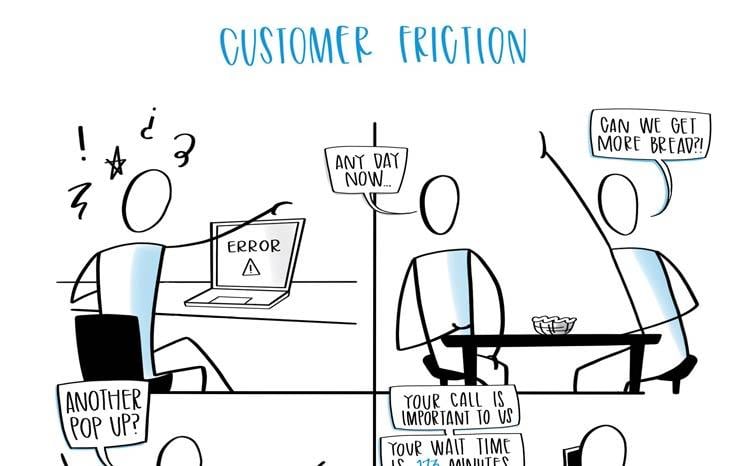
Smart challengers treat every stumbling block as a secret weapon: a moment to surprise,delight and convert. When a new user hesitates, a fast, empathetic touchpoint – whether a micro-tutorial, a contextual tip or a one-click escalation – becomes the brand’s loudest promise. Onboarding is not a checklist; it’s a choreography that turns confusion into confidence, so first encounters feel like guidance, not gatekeeping.
- Progressive disclosure: reveal features as users need them
- Contextual help: in-product hints tied to intent
- Fast fallback: live help or smart automation at friction points
Relentless service design embeds recovery and refinement into the product lifecycle: log every hiccup, prototype a smoother path, measure the tiny wins. By mapping micro-conversions and designing for graceful exits, smaller brands craft experiences that scale emotionally and operationally. Every resolved snag is a loyalty signal,and repeated,visible fixes become the narrative that steals attention – and market share – from slower incumbents.
wrapping Up
The story of challengers siphoning share from giants is less a single heist than a series of small, purposeful moves: sharper focus, faster learning, clearer stories and closer relationships with customers. Where large firms carry scale,challengers frequently enough carry attention – to unmet needs,to overlooked niches,to new modes of value creation. that asymmetry creates openings anyone willing to look can exploit.
For incumbents, the lesson is neither fatalistic nor simple: scale remains an advantage, but it must be married to curiosity and speed. For challengers, the playbook is practical rather than mystical – pick a corner, prove value, and let momentum do the rest. For observers, the takeaway is structural: markets are not fixed hierarchies but living ecosystems that reward adaptation.
market share is a measurement of relevance at a moment in time. giants and upstarts alike will find themselves trading places as customer expectations, technologies and distribution change. The real constant is the opportunity – and the challenge – of staying meaningfully useful to the people you serve.