


The market is a crowded room where everyone talks louder to be heard – adn in the corner, a quiet chance ofen waits unnoticed. Opportunities your competitors overlook rarely announce themselves with banners; they appear as small discrepancies, unasked questions, or service gaps that fit easily into a routine nobody has yet questioned. Learning to see those subtle signals is less about luck and more about changing how you look.This article will guide you through practical ways to tune your attention toward overlooked possibilities: reframing assumptions, listening to atypical data, mapping adjacent needs, and testing low-cost experiments. You won’t find secret shortcuts here, but you will find methods for making neglected potential visible and actionable. If you’re ready to treat the market as a landscape of clues rather than a battlefield of bluster, read on.
Listen Where Others Ignore Customers and Extract Untapped Needs
Start by tuning into the small, annoying signals people accept as normal. The gap between what customers say and what they actually do is where overlooked opportunities hide: a one-line complaint in a support thread,a chorus of similar emoji reactions,or a pattern of abandoned carts during checkout. Treat those micro-frictions like clues-map them, timestamp them, and connect them back to real moments of use.
- support tickets: recurring workarounds
- Social mentions: frustration framed as humor
- Usage logs: repeated detours that reveal unmet needs
- In-store whispers: what shoppers say only when not being watched
Turn observation into a playbook for unexpected product moves. Translate a small recurring annoyance into a focused experiment: prototype the smallest possible fix, test it with the exact segment that voiced the pain, and measure whether the friction disappears. Below is a quick cheat-sheet to help convert signals into product bets-use it as a rapid triage for ideas you and competitors have been blind to.
| Signal | Hidden Need | First-Move Experiment |
|---|---|---|
| Short complaint threads | Confusion around setup | 30‑second setup video + inline tips |
| Repeated refunds | Expectation mismatch | clarity-first product page + demo |
| Abandoned customizations | Too many choices | preset combos for common profiles |
Turn Quiet data Signals into Actionable Product and Marketing Ideas
Quiet cues live in the margins: a repeated search that returns no results, a mid-funnel hover that never becomes a click, a support message that hints at confusion rather than a bug. Listen to those whispers with event streams and short qualitative sweeps – session replays, keyword heatmaps, and support tag trends – then frame them as specific hypotheses. Try surfacing patterns with lightweight instrumentation and tag them to a single owner so insights don’t evaporate:
- Search misses: track failed queries to identify unmet intent
- Micro-dropouts: map hover-to-click gaps for UI friction
- Support nudges: cluster short tickets for recurring language
Once identified, turn each quiet signal into an experiment – a small, measurable change tied to a single KPI. Pick the smallest viable change that addresses the signal, run it to validate impact, and treat null results as learning. Focus on rapid cycles: design,test,measure,iterate. The table below offers quick, creative starter experiments you can run in a week or two to prove out ideas and capture wins your competitors overlooked.
| Signal | Experiment | Quick Win Metric |
|---|---|---|
| Frequent zero-result search | Auto-suggest alternatives + redirect to curated landing | Search-to-conversion rate ↑ |
| Hover without click on CTA | Microcopy change + subtle animation on hover | CTA click-through ↑ |
| Support tag: “confusing pricing” | Contextual explainer tooltip on pricing page | Billing support tickets ↓ |
Reverse Engineer Competitor Assumptions by Mapping Their Customer Journey
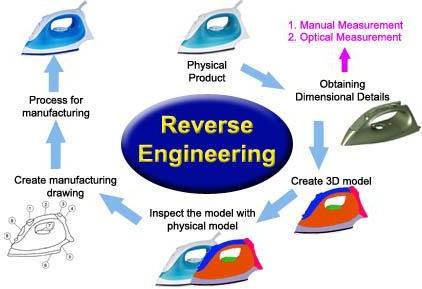
Put yourself in a customerS shoes and walk their path – from first sight to loyal repeat. At every touchpoint, log the explicit and implicit assumptions your rival is making: who the customer is, which channel they prefer, and what frictions are acceptable. Mapping those moments turns vague hunches into testable hypotheses, peeling back the choices competitors make and revealing where they’re betting – and where they’re blind.
- Discovery: Assume users find them via broad search?
- Evaluation: Assume product specs beat storytelling?
- Purchase: Assume checkout friction won’t cost conversions?
- Retention: Assume one-size-fits-all onboarding is enough?
Each shaky assumption is a tactical opening: design a focused experiment, collect evidence, then scale what works. Mine reviews, ad copy, abandoned carts and onboarding flows for contradictions between claimed value and real behavior. Below is a quick cheat-sheet to spark tests that exploit overlooked edges of a competitor’s journey.
| Stage | Typical Competitor Assumption | Opportunity to Test |
|---|---|---|
| discovery | Broad keywords capture demand | Target long-tail intent with niche content |
| Purchase | Price is the main barrier | Reduce friction and offer flexible fulfillment |
| Retention | Email nurture is sufficient | Ship in-product prompts and personalized onboarding |
Exploit Operational Friction and Regulatory loopholes to Deliver Rapid Wins

Hunt small choke points where rivals accept friction as the cost of doing business and turn them into advantages. Spot approvals that require paper signatures, legacy systems that force manual workarounds, or blanket policies that leave grey zones – then move fast with surgical fixes: automate a single step, offer a concierge to clear paperwork, or create a templated exemption flow. These micro-wins compound: reducing one delay in onboarding can double conversion for that cohort, and the reputation boost from being “the easy vendor” is immediate and measurable.
- Automate the repetitive: one bot to replace a human step.
- Localize compliance: small-region exemptions frequently enough untapped.
- Productize an exception: turn a custom workaround into a paid add-on.
- Fast pilot approvals: small, time-boxed trials to prove scale.
Move with intentional caution: every shortcut should be mapped to a risk control and a rollback plan. Keep a simple scorecard – impact, effort, legal exposure – and prioritize experiments that score high impact and low exposure. by systematizing how you exploit these gaps, you create a repeatable pipeline of quick wins that competitors overlook, converting regulatory and operational noise into a steady stream of advantage.
| Tactic | Typical Win time | Risk |
|---|---|---|
| Automate manual approvals | 2 weeks | Low |
| Leverage regional exemption | 1 month | Medium |
| Bundle non-regulated features | 1 week | Low |
Systematize frontline Intelligence and Reward Small Scale Experiments
Turn the frontline into a living radar. Build simple capture points – a shared slack channel, a one-click form, or a voicemail line – where salespeople, support agents and store staff can drop curiosities as they happen. Triage ruthlessly: tag each note by potential impact and ease of testing, then route the highest-probability signals to a tiny experiment budget. Celebrate experiments regardless of outcome so curiosity, not comfort, becomes the currency of your team.
- Daily two-line wins: one observation + one suggested test.
- Weekly “bring a clue” slot: 10 minutes in the team meeting for frontline tips.
- Micro-grants: $500-$2,000 for 2-week fast tests.
Design short,repeatable learning loops: hypothesis → small test → measurable signal → decision. Use a tiny scoreboard to keep clarity - if a test moves the chosen metric, scale; if not, archive the finding and move on. Below is a compact cheat-sheet to align signals with actions and avoid analysis paralysis.
| Signal | Micro-test | Success Metric |
|---|---|---|
| Customers ask for feature X | Prototype landing page | 5% click-to-sign |
| Repeated pricing confusion | simplified price copy A/B | 10% drop in support tickets |
| Local promo works in one store | Replicate in 3 stores | +15% week-over-week sales |
Prototype Fast, Measure Outcomes, and Scale What Actually Moves the Needle
Think small, ship fast. Start with a single, falsifiable hypothesis, build the smallest thing that could prove it, and get it in front of users within days - not months. Rapid cycles force clarity: each experiment should have one primary metric, a clear success threshold, and a pre-resolute stop condition. Embrace “cheap failure” so you can learn without burning runway; the goal is to discover which ideas produce real movement rather than polishing the ones that feel elegant on paper.
- Define one primary outcome (activation, retention, conversion)
- Limit scope: 1 feature, 1 user segment, 1 week
- Instrument before you launch: capture leading indicators
- Decide in advance: scale, iterate, or stop
Measure what matters and let the data steer your allocation of resources. Track a mix of short-term signals and long-term impact, then double-down on the smallest experiments that repeatedly beat their benchmarks. Use simple dashboards to spot winners quickly, and when a change proves durable, automate the handoff from prototype to product. Scaling isn’t about increasing spend-it’s about amplifying what actually moves the needle.
| Signal | Quick Threshold | Action |
|---|---|---|
| Activation lift | +15% week-over-week | Double-down: expand test |
| Retention delta | +5% after 14 days | Iterate: A/B tweaks |
| Revenue per user | +$1/month | Scale: roll out broadly |
In Conclusion
Opportunities that others miss rarely announce themselves with fanfare; they live in the margins, the small irritations customers tolerate, the quiet threads of data no one has pulled, and the habits everyone assumes are fixed. Training yourself to look for those margins-by listening more carefully, questioning assumptions, mapping customer journeys, and running tiny, fast experiments-turns chance into repeatable advantage. Remember that spotting an overlooked gap is only half the job; the other half is designing a simple way to explore it without betting the farm. Over time, those modest bets compound into a distinctive edge: a product tweak, a new channel, a different framing that reshapes how people perceive value. So take a breath, widen your field of view, and start with one small test this week. The things your competitors pass by are rarely hidden-they’re just waiting for someone to notice.