

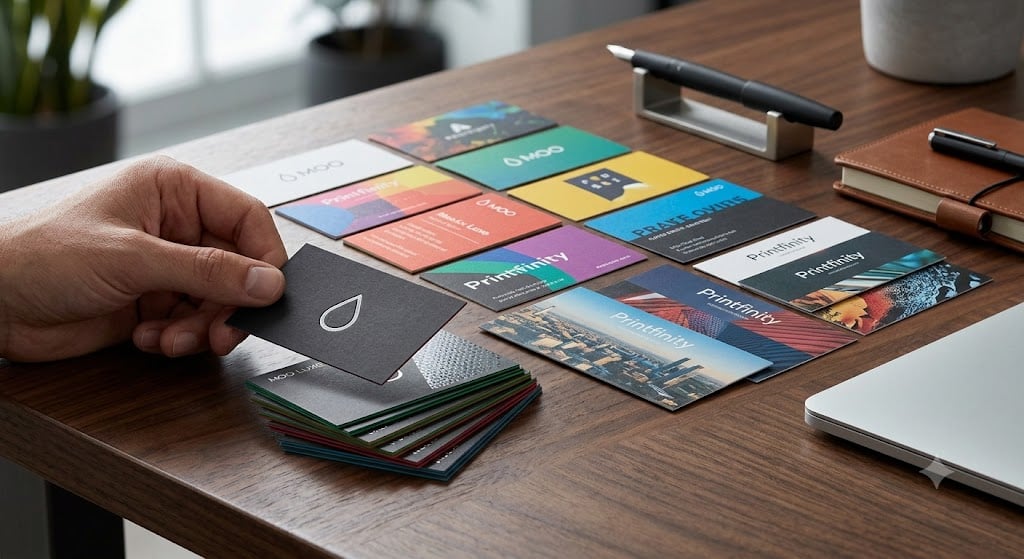

In Summary: The physical touchpoints of networking carry immense psychological weight. Investing in moo business cards offers entrepreneurs and tech professionals a strategic advantage by transforming simple contact sharing into a memorable tactile experience. This comprehensive review analyzes the material ROI, design ecosystem, and real-world costs of premium card printing to help you optimize your offline branding.
Despite the continuous rise of digital contact-sharing apps, the physical exchange of a business card remains the gold standard for high-stakes networking. For startup founders, creative executives, and corporate leaders, a flimsy, generic card signals a lack of attention to detail. Conversely, a premium card acts as a physical extension of your brand equity.
When you hand someone a moo business card, you are leveraging the psychological concept of haptic perception—the way information is gathered through touch. Studies in consumer behavior indicate that heavier, textured materials subconsciously elevate a person’s perception of quality and trustworthiness. If your objective is to command authority, your physical assets need to reflect that ambition from the very first handshake.
The Strategic ROI of Moo Business Cards
Premium printing is not an aesthetic indulgence; it is a conversion tool. When analyzing the investment required for moo business cards, decision-makers must look beyond the initial cost per unit and evaluate the impact on brand retention. Standard online printers frequently produce thin, light stock cards that are easily bent and quickly discarded. Moo, conversely, has built its market position on thick paper weights and specialized finishes that practically demand a longer shelf life on a prospect’s desk.
Material Analysis: Paper Weights and Finishes
Moo categorizes its offerings based on paper thickness, measured in points (pt) or grams per square meter (gsm). Understanding these technical specifications ensures you select a product that aligns perfectly with your brand identity:
-
Original Stock (16pt / 350gsm): The baseline standard, which outclasses most competitors’ premium options. It provides a sturdy feel available in matte or gloss finishes.
-
Cotton Stock (18pt / 115lb): Manufactured from 100% recycled t-shirt fabric in collaboration with Mohawk Fine Papers. This tree-free alternative offers a crisp, distinct texture ideal for sustainability-focused brands.
-
Super Stock (19pt / 400gsm): A highly resilient option designed to hold up under heavy handling, available with specialized finishes like gold foil, silver foil, or spot UV gloss.
-
Luxe Stock (32pt / 600gsm): Formed by bonding four layers of archival-quality paper together. It features a visible, customizable color seam sandwiched in the middle, offering an immediately recognizable premium feel.
Advanced Customization: Printfinity and Special Finishes
One of the most compelling competitive advantages of the platform is Printfinity. This proprietary printing technology allows businesses to print a different image or design on the back of every single card within a single pack.
[Traditional Printing] -> One Design Setup -> 500 Identical Cards
[Moo Printfinity]      -> One Design Setup -> Up to 50 Unique Back Designs per Pack
For tech professionals and creatives, this functionality serves as a portable portfolio. A graphic designer can feature 50 unique project snapshots; an architectural firm can showcase diverse properties; a startup team can print varied corporate core values or product feature highlights. This flexibility turns a mundane handoff into an interactive moment where the recipient chooses the design that resonates most with them.
Spot UV, Foils, and Raised Textures
To further differentiate your branding, specialized printing techniques can be applied to the Super and Luxe stocks:
-
Raised Gloss: A transparent, tactile layer that lifts specific design elements (like logomarks or typography) off the card surface, encouraging physical touch.
-
Gold & Silver Foil: A metallic finish bonded directly to the fibers to add a classic, high-contrast gleam.
-
Soft-Touch Matte: A velvety, non-reflective coating that alters the surface friction, delivering an ultra-premium tactile feel.
Tactical Framework: Designing for Premium Print
A common mistake is applying standard digital designs directly to premium physical mediums without adjustments. High-end paper stocks behave differently under ink distribution than low-grade options. Follow this structured workflow to optimize your design file configuration:
Cost-Benefit Matrix: Moo vs. Traditional Printers
While the quality of premium stocks is clear, managing procurement budgets requires an objective look at the unit economics. The table below compares baseline entry tiers across key commercial indicators.
| Evaluation Metric | Entry-Level Online Printers | Moo Business Cards (Original) | Moo Business Cards (Luxe) |
| Average Thickness | 10pt to 14pt | 16pt | 32pt |
| Tactile Impression | Flexible, standard glossy/matte | Rigid, heavy, premium matte | Completely unbending, ultra-thick |
| Unique Back Designs | 1 per order batch | Up to 50 per pack (Printfinity) | Up to 50 per pack (Printfinity) |
| Sustainability Options | Standard recycled stocks | 100% Tree-Free Cotton | Wind-power manufactured options |
| Price Point Index | Low ($) | Moderate ($$) | Premium ($$$) |
The Verdict: When Should You Invest?
For internal operations or high-volume, low-touch distribution (like leaving stacks on a local event table), premium cards are not cost-effective. However, for client-facing professionals, B2B account executives, enterprise founders, and luxury brand managers, the cost difference is negligible compared to the value of a single won contract.
When you scale your business, your physical tools must match the caliber of your digital platform. Investing in high-quality print assets ensures that when the digital noise clears, your brand remains physically present on the desks that matter most.
Frequently Asked Questions (FAQ)
What are the standard dimensions of Moo business cards?
Moo offers two primary footprints: the Standard US size (3.5″ x 2.0″) and the slightly longer, narrower Moo Size (3.3″ x 2.16″). They also offer square cards measuring 2.5″ x 2.5″ and mini-cards at 2.75″ x 1.1″.
Can I write on Moo business cards during networking events?
Yes, but paper choice matters. The Cotton stock and the un-coated Luxe stock feature highly absorbent finishes that work beautifully with ballpoint pens and gel pens. Cards with a heavy matte or gloss coating will require a permanent fine-tip marker to avoid smudging.
What is the minimum order quantity for a print run?
The baseline ordering volume begins at 50 cards per pack. This low minimum entry threshold makes it easy for individuals to test unique layouts or print custom batches for specific corporate events without committing to thousands of units.
How eco-friendly are the premium paper options?
Moo provides excellent sustainable solutions, highlighted by their Cotton business cards, which are manufactured from 100% post-industrial recycled cotton fabric scrap. Their standard and Luxe papers are sourced from sustainable forests certified by the Forest Stewardship Council (FSC), ensuring an environmentally sound supply chain.