


Imagine a crowded marketplace where every stall sells the same polished silverware,all gleaming to identical shine. A few people stop to admire the perfection,but most move on-bored by sameness. Now picture a single stall painted turquoise,offering rough-hewn spoons engraved with tiny,unexpected patterns. Curious footsteps slow. Conversations begin. that quiet contrast-between flawless replication and unmistakable difference-is the hinge of many decisions we make as creators, leaders, and consumers.
This article examines why differentiation often outperforms perfection. Perfection promises safety: fewer flaws,fewer complaints,a lower risk of failure. Differentiation promises relevance: a distinct voice, a recognizable offer, and the ability to stand out when attention is scarce.We’ll explore how embracing idiosyncrasy can accelerate learning, build loyalty, and uncover niches that perfection alone can’t reach.
We won’t romanticize imperfection, nor will we dismiss quality. Instead, we’ll unpack the trade-offs-when striving for flawless execution is appropriate, when it becomes a trap, and how strategic distinctiveness can be both practical and durable. expect examples from products, brands, and creative work, plus simple frameworks for choosing where to refine and where to diverge.
Why differentiation wins over perfection: the market value of memorable offerings
In crowded markets, flawlessness rarely equates to attention. A distinct personality – a small quirk, a bold promise, an unusual visual – is what people remember and recommend. Memorable offerings become mental shortcuts for choice; they turn into stories customers tell, not checklists buyers compare. That social currency - buzz,referrals,and emotional resonance – often outvalues a theoretically perfect product that quietly blends into the background.
Concrete advantages show up quickly:
- Visibility: stands out in revelation and search results.
- Speed: gets to market sooner and evolves with real feedback.
- Loyalty: builds fans who defend and promote the brand.
| Metric | Distinctive Offer | Perfect-but-Generic |
|---|---|---|
| Recall | High – memorable hook | Low – easily forgotten |
| Time-to-market | Fast – MVP with character | Slow – endless refinement |
| Emotional Value | Strong – forms attachments | weak – purely functional |
Choosing a clear, differentiated path creates tangible market advantages – not as imperfections are virtues, but because distinctiveness turns offerings into assets that customers can recognize, repeat, and value.
identify your signature difference and validate it quickly with real customers
Focus on one small, distinctive feature that can actually change a buyer’s decision – not on polishing every pixel. Treat that idea as a clear, testable promise: define the simplest outcome that would convince you the feature matters, pick one metric to watch (activation, retention, or referral), and build the leanest possible version that can deliver a signal. Shipping something imperfect that provokes real behavior from users is far more valuable than waiting for a flawless launch that may never reveal whether anyone cares.
Move fast with experiments that expose how real people respond: concierge offers, a targeted landing page, a clickable prototype, rapid A/B micro-tests, or an invite-only pilot. Use these to gather decisive evidence without wasting months of engineering time.
- Concierge test – manual service to learn what users value
- Landing page – measure interest with conversion
- Prototype – observe task completion and friction
- A/B micro-test – small changes, immediate signal
- Invite pilot - qualitative feedback plus usage data
| Experiment | Duration | signal |
|---|---|---|
| Landing page | 3-7 days | Click-to-sign |
| Clickable prototype | 1-2 weeks | Task success |
| Concierge offer | 1-3 weeks | Repeat requests |
Use the signals to either double down, iterate quickly, or move on – not to perfect an already unproven idea.
Build minimum lovable features that amplify your unique position
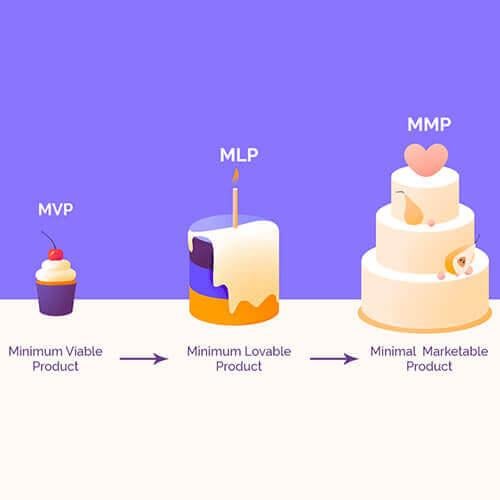
Perfection is seductive but slow; the market rewards who can be clearly different first. Build a few minimum lovable features that put your singular strength on display – features that feel intentionally designed rather than generically polished. When people can name what makes you special in one sentence, you’ve won more than when every pixel is perfect but forgettable.
Choose ruthlessly and iterate quickly: clarity beats completeness. Ship the part that makes customers smile, then learn and expand around that joy.
- Showcase your edge: surface the one idea only you can own
- Delight tiny moments: micro-interactions that create loyalty
- Strip the unnecessary: remove features that blur the message
- Measure and refine: use signals, not opinions, to guide the next step
The compound effect of a few memorable delights will amplify your position far more than a delayed, indistinguishable masterpiece.
Use quantitative metrics and qualitative feedback to prioritize what truly moves the needle

Measure what matters – raw beauty and flawless polish are seductive, but they rarely translate to growth. Anchor decisions in a blend of hard numbers and human stories: segment your metrics to reveal where tiny product changes create disproportionate returns, and pair that with customer anecdotes that explain the “why” behind the math. Treat experiments like hypotheses, not artistry; ship small, watch lift, and iterate. This approach lets teams choose bold, differentiating bets over endless refinement, leaning into clear signals of impact instead of chasing elusive perfection.
use a simple playbook to separate noise from prospect and allocate time to what will actually drive adoption and loyalty:
- Calculate delta: focus on measurable lifts (conversion, retention, LTV) rather than vanity totals.
- Listen in context: collect verbatim feedback to understand frustration points and unmet needs.
- Prioritize scarcity: build features that competitors can’t easily replicate, even if they’re imperfect.
- Fail fast: kill or iterate on ideas early based on combined signals.
| Signal | Quick read |
|---|---|
| Conversion uplift | Feature resonates – double down |
| High churn + similar complaints | Fix usability before polishing |
| Positive NPS comments | Amplify differentiator |
Break the perfection habit by setting timeboxes, decision rules and clear release criteria
Perfectionism paralyzes progress; a good antidote is to force clarity with constraints that turn intention into action. Start by carving the work into a fixed timebox-an unmistakable window that defines when ideas graduate from draft to decision. Pair that with simple decision rules (for example: “ship if 80% of targeted use cases pass” or “defer non-critical polish to v2”) so choices aren’t made emotionally but mechanically. Below are the three core anchors that keep teams moving forward without sacrificing quality:
- Timebox: 1-2 sprints for a feature experiment, 1 day for copy changes.
- Decision rule: Predefined pass/fail criteria to avoid rehashing minor trade-offs.
- Release criteria: Clear acceptance checklist tied to user value, risk threshold and rollback plan.
Translate these anchors into rituals-regular demos, a “ready-to-ship” checklist, and automatic follow-up experiments-and you convert perfectionist hesitation into measurable iteration. The result is not sloppy work but focused differentiation: more reliable releases, faster learning, and a stronger signal of what truly separates your product in the market.
Implement a differentiation playbook for teams with templates for testing, scaling and measuring impact
Give teams a practical playbook that replaces paralysis with momentum: a compact set of templates that make it easy to propose, run and learn from experiments without waiting for consensus. Start each sprint with an experiment brief that states the hypothesis, the riskiest assumption and a clear success signal; follow with a lightweight measurement plan and a short retrospective template so insights feed the next round. Build roles into the templates – who owns the test, who tracks the metric, who decides to scale – and reward small, visible wins so differentiation becomes part of the team’s rhythm rather than a one-off effort.
- Experiment brief (1 page)
- Measurement plan (primary + guardrail metrics)
- Scale/Stop checklist
Use standardized measurement blocks so every result can be compared and aggregated: capture baseline, effect size and confidence level, then map the outcome to a scaling action. Make the playbook actionable with quick decision rules – if conversion lifts by X and error < Y, promote to staging; if not, iterate with a new hypothesis. Below is a simple cheat-sheet table teams can copy into their docs to align metrics and next steps.
- Signal metrics to watch
- Thresholds for action
| Metric | Threshold | Action |
|---|---|---|
| Conversion lift | ≥ 8% | Scale to cohort |
| Retention delta | ≥ 3% | Promote to pilot |
| Bug rate | < 1% | Proceed to rollout |
Future outlook
Perfection is a agreeable mirage – neat, predictable, and endlessly deferred. Differentiation, by contrast, is a purposeful, sometimes messy decision to stand where others do not. It invites experimentation,speed,and clarity about who you serve; it turns limited resources into memorable advantages and makes iteration a strategy rather than an admission of failure.
This isn’t an argument to abandon craft or settle for sloppiness. It’s an invitation to prioritize distinct value over unachievable polish: launch the idea that teaches you, refine from real feedback, and let identity guide choices more than checklist-driven cosmetics. In markets and relationships alike, distinctiveness breeds recognition; perfection mostly breeds sameness.
So consider what you can stand for today, not what you might perfect someday. Make something that can be known, improved, and relied upon – and let being different do more of the heavy lifting than being flawless ever could.