

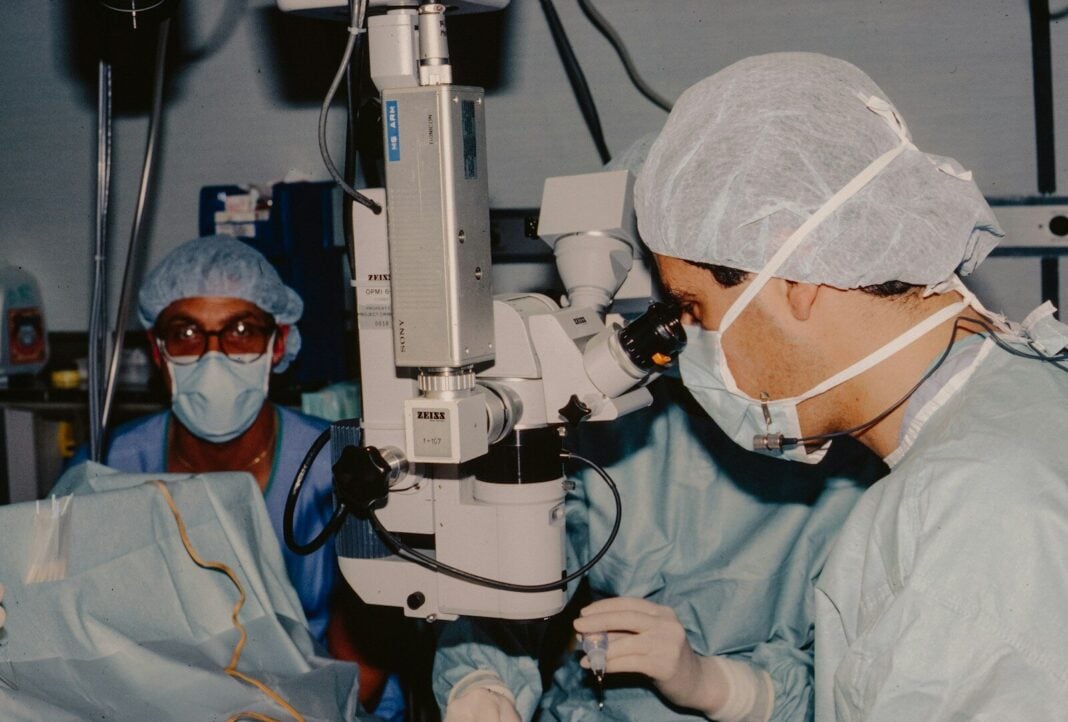

If you have cataracts in both eyes, one of the first questions you will ask your surgeon is: how long between cataract surgery on each eye? The standard answer from most eye care professionals is a waiting period of one to four weeks between procedures. However, the exact timeline depends on your personal healing rate, your surgeon’s protocol, and how well your first eye recovers before the second surgery begins.
Surgeons almost never operate on both eyes on the same day. This approach protects your overall vision during recovery and gives your doctor critical information from the first eye that improves outcomes for the second. Therefore, understanding the timeline, the reasons behind it, and what to expect during recovery helps you plan your treatment with confidence.
The Standard Waiting Period Between Cataract Surgeries
Most ophthalmologists recommend a gap of one to two weeks between cataract surgeries on each eye. The National Eye Institute advises patients to wait approximately one month before proceeding with the second eye. Furthermore, some clinics schedule surgeries as close as a few days apart, for example on a Monday and Thursday of the same week, when a patient heals quickly and the doctor is satisfied with early recovery.
The range across different medical practices looks like this:
- Minimum gap: 48 hours to a few days, used only when initial healing is smooth and confirmed by the surgeon
- Standard gap: One to two weeks, the most commonly recommended timeframe worldwide
- Conservative gap: Three to four weeks, preferred by surgeons who want full stabilization before proceeding
- Maximum recommended gap: Up to four to six weeks when complications or slower healing are present
Additionally, the surgeon typically operates on the worse eye first. This approach maximizes the immediate improvement in your functional vision and allows the doctor to refine the lens prescription for the second eye based on how the first responds.
Why Surgeons Do Not Operate on Both Eyes at Once
Performing cataract surgery on both eyes simultaneously carries risks that far outweigh the convenience of a single appointment. Therefore, virtually all ophthalmologists follow a one-eye-at-a-time protocol as a standard of care.
Here are the key reasons the waiting period exists:
- Safety net for vision: If a complication arises after the first surgery, you still have functional vision in the untreated eye, reducing the risk of falls or accidents during recovery
- Infection risk management: Operating on both eyes simultaneously doubles the risk of bilateral endophthalmitis, a rare but serious eye infection that can cause permanent vision loss
- Lens power adjustment: The outcome of the first surgery gives your surgeon precise data to fine-tune the intraocular lens (IOL) power for your second eye
- Complication detection: Any unexpected inflammation, swelling, or refractive error identified in the first eye can be corrected before it is replicated in the second
- Healing confirmation: The gap allows your surgeon to confirm that the first eye is on track before committing to the second procedure
How Long Between Cataract Surgery on Each Eye: Factors That Affect Timing
No single timeline fits every patient. Your surgeon will assess several personal factors before scheduling the second procedure. Understanding these variables helps you set realistic expectations for your own treatment plan.
Individual Healing Rate
Some patients heal remarkably fast. Inflammation subsides within days, and vision stabilizes quickly. As a result, their surgeon may schedule the second surgery within a week of the first. In contrast, older patients or those with slower tissue healing may need the full four weeks before the second eye is safe to operate on.
Pre-Existing Eye Conditions
Conditions such as diabetic retinopathy, macular degeneration, glaucoma, or dry eye disease can slow recovery and increase surgical risk. Therefore, patients with these conditions typically require a longer gap to ensure the first eye has stabilized fully before the second surgery proceeds.
Anisometropia and Binocular Vision Imbalance
After the first surgery, one eye has a corrected lens and the other still has a cataract. This difference in visual clarity between eyes is called anisometropia. It can cause headaches, dizziness, and difficulty focusing. Furthermore, patients who experience significant imbalance may actually benefit from a shorter gap between surgeries to restore balanced binocular vision faster.
Lifestyle and Work Demands
Patients who need to return to work quickly or resume driving may prefer a shorter gap between surgeries. Additionally, patients who rely on both eyes for precision tasks such as reading, sewing, or operating machinery may find the between-surgery period particularly challenging. Therefore, surgeons often factor in lifestyle needs when recommending a specific timeline.
Overall Health and Age
Younger, healthier patients generally recover faster and can proceed with the second surgery sooner. However, patients managing systemic conditions such as diabetes or autoimmune disorders may heal more slowly. As a result, their surgeon will monitor recovery more closely before clearing them for the second procedure.
Recovery Timeline After Each Cataract Surgery
Knowing what to expect during recovery helps you prepare practically for each stage of the process. Cataract surgery is an outpatient procedure lasting approximately 15 to 30 minutes. You return home the same day wearing a protective eye pad or bandage shield.
Here is a general recovery timeline for each operated eye:
- Day 1: Vision is blurry and the eye feels mildly uncomfortable; wear the protective shield as directed and rest
- Days 2 to 3: Pain and discomfort typically subside; vision begins to improve noticeably in most patients
- Week 1: Most patients notice significantly clearer vision; continue prescribed eye drops and avoid rubbing the eye
- Weeks 1 to 2: Initial recovery period completes for most patients; inflammation reduces and the eye stabilizes
- Weeks 4 to 6: Full recovery and complete vision stabilization occur for the majority of patients
- Up to 8 weeks: Some patients, particularly those with pre-existing conditions, may need up to eight weeks for complete healing
Furthermore, most patients can resume light daily activities within a day or two after each surgery. However, strenuous exercise, swimming, and heavy lifting should be avoided for at least two weeks after each procedure.
Post-Operative Care During the Between-Surgery Period
The period between your first and second cataract surgery requires careful attention to post-operative guidelines. Following these instructions protects the healing first eye and prepares your body for the upcoming second procedure.
- Use prescribed eye drops consistently: Antibiotic and anti-inflammatory drops are critical to preventing infection and reducing swelling in the operated eye
- Wear the protective eye shield at night: Avoid accidentally rubbing or pressing on the healing eye during sleep
- Avoid water contact: Keep the operated eye away from pools, hot tubs, and direct shower spray for at least two weeks
- Do not wear contact lenses: Wait until your surgeon clears you before resuming contact lens use in either eye
- Attend all follow-up appointments: Your surgeon needs to assess healing at scheduled intervals before proceeding with the second eye
- Protect eyes from bright sunlight: Wear sunglasses outdoors to reduce light sensitivity and protect the healing lens
Additionally, inform your surgeon immediately if you experience sudden vision loss, increasing pain, excessive redness, or flashes of light after either surgery. These symptoms may indicate a complication that requires prompt attention before the second procedure can be scheduled.
Bilateral Immediate Sequential Cataract Surgery (ISBCS)
In some specialized clinical settings, a practice called Immediately Sequential Bilateral Cataract Surgery (ISBCS) is performed. This involves operating on both eyes in the same surgical session on the same day. However, it remains rare and is reserved for very specific patient cases.
ISBCS is considered in the following circumstances:
- Patients who face significant logistical barriers to returning for a second appointment, such as those living in remote areas or with limited mobility
- Patients who require general anesthesia and for whom a second anesthetic episode carries disproportionate medical risk
- Cases where severe anisometropia from one corrected eye would create dangerous visual imbalance during a standard recovery period
Furthermore, even when ISBCS is performed, strict protocols require treating each eye as a completely separate procedure with separate instruments, separate surgical teams where possible, and separate intraocular lens sets. This minimizes the risk of bilateral complications. However, the standard one-eye-at-a-time approach remains the global norm for the vast majority of patients.
What to Expect After Both Eyes Are Treated

Once both cataract surgeries are complete and full recovery occurs, most patients experience a dramatic improvement in their quality of life. Colors appear brighter and more vivid. Reading and driving become easier. Furthermore, many patients significantly reduce or eliminate their dependence on glasses after bilateral cataract surgery, particularly when premium intraocular lenses are used.
After your second eye has healed fully, your surgeon will prescribe updated glasses or contact lenses if needed. This prescription appointment typically takes place six to eight weeks after the second surgery, once vision has fully stabilized in both eyes. As a result, you enter your post-surgery life with the clearest possible vision outcome from the procedure.
Tips to Speed Up Recovery Between Surgeries
While you cannot force your eye to heal faster, you can create the best possible conditions for efficient recovery between your two surgeries.
- Rest consistently: Adequate sleep gives your body the resources it needs to accelerate tissue healing
- Eat a nutrient-rich diet: Foods high in vitamins C, E, and zinc support eye tissue repair; additionally, omega-3 fatty acids help reduce post-surgical inflammation
- Stay well hydrated: Proper hydration supports circulation and helps your body clear post-surgical inflammation more efficiently
- Avoid smoking: Smoking constricts blood vessels and slows the healing process; therefore, stop smoking before surgery if possible and maintain abstinence throughout recovery
- Follow your drop schedule precisely: Missing doses of prescribed eye drops is one of the most common reasons for delayed healing after cataract surgery
The waiting period between cataract surgeries on each eye is not a delay; it is a deliberate and medically essential step that protects your vision and improves your final outcome. Working closely with your surgeon, following post-operative instructions carefully, and understanding each stage of the process gives you the best possible chance of clear, comfortable vision in both eyes after treatment is complete.