Picture a digital shoreline littered with shopping carts-half-loaded, wheels spinning in place, their contents a testament to intention interrupted. These abandoned carts are not failures so much as frozen opportunities: traces of real demand, contactable signals, and low-hanging ways to recover value. Looked at differently, what appears as wasted traffic is actually a hidden goldmine waiting to be mined with the right tools and tactics.
The scale is striking. Across categories and platforms,a large share of initiated purchases never reach the finish line-leaving ample revenue on the table for retailers that understand why buyers bail and how to respond. Because each abandoned cart reflects a customer who was partway through a purchase, it offers richer context than a cold lead: items viewed, prices considered, and even the pain point that stopped checkout in its tracks.
This article peels back the layers of cart abandonment to show how to find and extract that buried value. We’ll unpack the common causes, examine the behavioral signals worth tracking, and outline practical, ethically grounded strategies-from UX fixes and recovery emails to targeted incentives and measurement frameworks-that turn dormant intent into completed sales and stronger customer relationships.
the psychology behind cart abandonment and what it reveals about buyer intent
At first glance, a left-behind cart looks like a lost sale, but it’s really a snapshot of a shopper’s mind at the moment of decision.These moments are shaped by split-second emotions – fear of commitment, cognitive overload, and a need for reassurance – plus practical friction like surprise shipping or slow checkout. The pattern is predictable: shoppers will pause, probe, and often leave to gather more details. Inside that hesitation lies actionable insight: a cart isn’t a rejection, it’s a question.Listen for answers such as price sensitivity, trust gaps, or comparison behavior and you’ve got a roadmap to re-engage them.
Treat every abandoned cart as a data point about intent and tailor your recovery like a gentle conversation rather than a hard sell.Below are common psychological triggers to monitor and their rapid interventions:
- Unexpected costs – highlight transparent pricing and free-shipping thresholds.
- Security doubts – show badges, reviews, and clear return policies.
- Decision fatigue – simplify choices with curated bundles or “best for you” picks.
| Signal | What it reveals | Quick fix |
|---|---|---|
| Cart abandoned after shipping shown | Price-sensitive or surprised | Offer shipping discount or bundle |
| Repeated visits,no purchase | High intent,still deciding | Use social proof and comparison aids |
| Abandon on payment step | Trust or friction issue | Simplify options,show secure checkout |
use these signals as a map: small,context-aware nudges often convert a hesitant browser into a confident buyer,revealing that abandoned carts are less waste and more opportunity.
Segmenting abandoned carts for targeted recovery and tailored incentives
Think of abandoned carts as a map of unfinished stories – each one reveals a different reason a customer paused. By grouping carts into smart segments like high-value but undecided, single-item bargain hunters, or returning customers who stalled at shipping, you can design recovery flows that feel personal, not pushy. Start with simple signals (cart value, time since abandonment, product type) and layer in behavioral cues (page views, coupon clicks, device used) so your outreach answers the real objection instead of shouting the same generic plea into the void.
- Intent: multiple views vs. one quick add
- value: under $50, $50-$200, $200+
- Barrier: shipping cost, checkout friction, payment errors
| Segment | Trigger | suggested Incentive |
|---|---|---|
| High-Value Prospects | Cart > $200, 24h | Free expedited shipping |
| Price-Sensitive Shoppers | Abandoned after viewing coupons | Limited-time 10% off |
| Returning Browsers | Multiple product views | Personalized bundle suggestion |
Onc segments are defined, craft messages that mirror the customer’s journey: a concise reminder for quick deciders, a comparison or social-proof note for the cautious, and a step-by-step help offer for those stuck in checkout. Use A/B testing to refine subject lines, send cadence, and incentive size, and track not just reopen rates but actual lift in conversion and margin. Over time,the smallest adjustments – matching tone,timing,and value – turn a stream of abandoned carts into a predictable,profitable recovery pipeline.
Designing high converting recovery messages with timing,tone,and offer strategies

Think of abandoned-cart messages as gentle nudges that respect rhythm and emotion: a message that lands too soon feels pushy, one that arrives too late feels irrelevant. Use a timing ladder – immediate (within 1 hour) to capture impulse, reminder (24 hours) to re-open the decision, and sweetener (3-5 days) to close the gap – and pair each with a matching tone. A quick, concise note after checkout abandonment should be practical and helpful; the 24-hour touch can be warmer and product-focused; the later outreach can introduce social proof or a small incentive. Consider a simple cadence:
- 0-1 hour: confirmation/assistance – reduce friction.
- 24 hours: friendly reminder – answer objections.
- 72+ hours: value add - offer or urgency.
Craft language that reflects brand personality but always leads with empathy – customers respond to relevance more than rhetoric.
Offers are the secret sauce, but the best strategies test value, not just price: try free shipping for low-margin items, a small percentage discount for higher-ticket goods, or a time-limited bonus for subscription signups. Use A/B tests to learn which combination of timing, tone, and offer lifts conversion without eroding margin. Below is a compact cheat-sheet you can adapt for quick campaigns:
| Offer | Example | Best for |
|---|---|---|
| Free Shipping | Free over $50 | Low-priced goods |
| Small Discount | 10% off, 48h | Higher AOV items |
| Limited Bonus | Free gift w/ purchase | Products with margin |
Balance curiosity and clarity in your copy, and let data decide which blend of message cadence, emotional tone, and incentive becomes your highest-performing recovery loop.
Reducing friction at checkout with UX fixes that stop abandonment before it happens
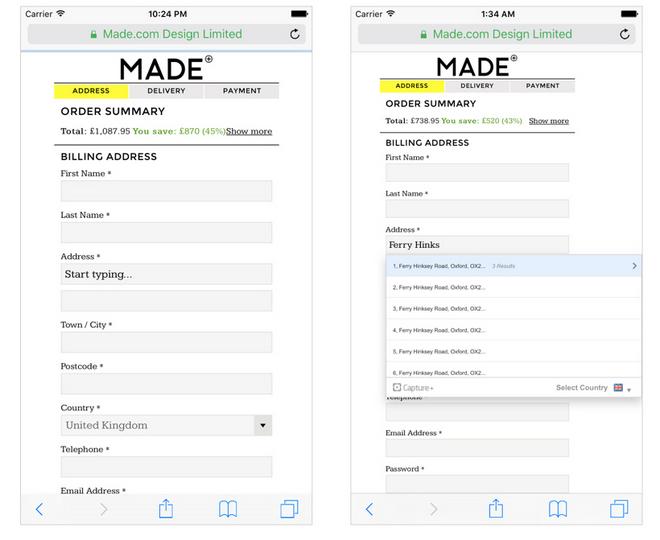
Think of checkout as a tightrope: one gust of friction and the cart falls. Patch the obvious holes first – remove forced account creation, add a clear progress indicator, and offer familiar payment methods – then polish with tiny conveniences that read like kindness: address autofill, remembered preferences, and a visible security badge. Small changes compound; a single extra click, confusing label, or surprise cost can turn intent into abandonment.Below are fast wins you can deploy this week to stop leaks without rewriting the whole flow:
- Guest checkout – reduce time-to-purchase by removing mandatory signups.
- Progress bar – set clear expectations at every step.
- Multiple payment options – include wallets and BNPL for conversion lift.
- One-click fallback – let returning users buy faster with saved methods.
Measure every tweak and treat data like a miner’s map: small experiments reveal the richest veins.Instrument conversion funnel events, run short A/B tests on labels and CTA colors, and track drop-off by exact step so fixes target the real pain points. Quick reference:
| Fix | expected lift |
|---|---|
| Guest checkout | +8-15% |
| Progress bar | +3-7% |
| Saved payment + autofill | +10-20% |
- Test small, learn fast – prioritize changes with the highest impact/cost ratio.
- Automate recovery – timed emails or one-click cart recovery cut wasted intent into revenue.
Automating follow ups and SMS and email flows to capture lost revenue efficiently

Turn shopper indecision into predictable revenue by weaving timely SMS and email threads that feel human,not robotic. Start with behavioral triggers-cart abandonment, browse abandonment, and checkout starts-and map responses that mirror intent: a friendly reminder, a visual of the item, then a small nudge such as stock warnings or a limited coupon. Personalization (name, product, recent interactions), channel choice (SMS for immediacy, email for detail), and timing (within 30-60 minutes, 24 hours, 72 hours) are the levers that turn cold abandoners into customers. Core components to include right away:
- Immediate trigger message with product image
- Second touch with social proof or review
- final nudge with urgency or discount
These sequences compound: small lift per touch multiplies into meaningful recovered revenue without adding headcount.
Practical cadences are short and iterative-test one hypothesis at a time and measure lift. A simple three-touch model can often outperform scattershot outreach; consider this starter cadence as a benchmark:
| Touch | channel | Timing | Estimated Lift |
|---|---|---|---|
| 1 | SMS | 30-60 minutes | 3-6% |
| 2 | 24 hours | 2-4% | |
| 3 | SMS + Email | 48-72 hours | 1-3% |
Optimize continuously with these quick wins:
- Segment by cart value and product type
- Experiment with creative and incentives
- Measure revenue per message, not just open rates
Automations that are small, targeted, and data-driven become a low-effort, high-return engine for capturing revenue that would otherwise slip away.
Measuring recovery performance and running split tests to optimize recovery rates

Think of abandoned carts as a series of clues that, when measured correctly, reveal where the treasure is hidden. Start by tracking a few core signals:
- Recovery rate - percentage of carts reclaimed after outreach
- Open & click-through rates – how compelling your messages are
- Time-to-first-action – the gap between abandonment and contact
- Revenue per recovered order – the true value of each recovered cart
These numbers let you prioritize fixes: a high open but low conversion points to weak post-click experience,while lots of early abandons suggest immediate friction at checkout. Layer simple tags (product, cart value, device) on top of these metrics to reveal micro-audiences that respond differently to the same outreach.
Once you have a baseline, treat recovery like a lab: run split tests that isolate a single variable and let the data decide. Test items such as
- Timing – immediate vs. 24-hour reminder
- Message tone – helpful nudge vs. scarcity-driven
- Channel mix – email, SMS, push or a combination
- Incentives – no discount, free shipping, small percent off
keep tests short, pick one primary KPI (recovery rate or revenue per recovered cart), and aim for statistical confidence before rolling out winners. Over time, these iterative experiments transform guesswork into a repeatable engine that squeezes consistent revenue from what used to be dismissed as lost carts.
Final Thoughts
Think of abandoned carts not as lost sales but as a quiet ledger of intent – a trail of breadcrumbs leading to an overlooked treasure chest. With a little patience, careful listening, and smart testing, those half-built baskets reveal why people leave and how to gently draw them back.
Mining that goldmine doesn’t require alchemy, just empathy and disciplined work: small UX fixes, clearer value signals, relevant reminders, and better-timed offers can turn friction into conversion. Treat each recovery as an experiment,let data point the way,and accept that the richest seams often require repeated,thoughtful effort to expose.If you walk away from the cart abandonment problem with one idea, let it be this: the opportunity is less about coercion and more about understanding. When you match a clearer customer experience to the intent already shown in an abandoned cart, the payoff is both measurable and lasting.