Imagine a storefront that never opens its doors, yet customers keep ordering, servers keep shipping, and revenue ticks upward every month.There are no office photos on the About page, no org chart, no payroll-just code, contracts, and ecosystems humming along. This apparent paradox is the subject of our dive: how some startups manage to scale while officially reporting zero employees.
This phenomenon isn’t a trick of accounting so much as a new model of orchestration. Advances in cloud infrastructure, payments and logistics platforms, global freelance markets, and increasingly capable automation tools let founders stitch together services and people who aren’t on the payroll. at the same time, decentralized projects, tokenized communities, and open-source ecosystems redefine what “team” and “work” look like, substituting coordination and incentives for traditional employment.
In the pages ahead we’ll explore the practical mechanics behind these scaled, staffless ventures-what they rely on, how they manage quality and growth, and the trade-offs they face. We’ll also consider the broader implications for founders,users,and labour markets when companies can grow without a conventional workforce. This isn’t an argument for or against the approach; it’s an examination of a structural shift in how startups are built and operated in the digital age.
Rethinking the Organization: Architecting Systems that replace Traditional Employees
Treat the company as a living software artifact: processes are APIs, decisions are rules engines, and outcomes are measured as events. Rather of hiring to plug gaps,founders design composable systems that stitch together microservices,third‑party platforms,and clever automation.The result is a compact, resilient enterprise where scale comes from orchestration rather than headcount. consider core primitives that replace repeated human tasks as building blocks:
- Event‑driven workflows that route work to the right service
- API‑first integrations for frictionless third‑party leverage
- Policy‑as‑code for consistent governance and compliance
- Observability and self‑healing to minimize manual ops
Architectural patterns determine which roles disappear and which persist – and they are often surprisingly simple. Embracing purposeful minimalism means designing for the smallest number of human interventions while keeping clear escalation paths; human judgment remains for edge cases, strategy, and empathy. A compact snapshot of how responsibilities map to systems:
| System | Primary Function | Human Touch |
|---|---|---|
| Billing Engine | Invoicing & Reconciliation | Rare escalations |
| Support bot | Tier‑1 troubleshooting | Hand‑off to specialists |
| Growth Orchestrator | Acquisition experiments | Strategic tuning |
- Design for graceful failure, not heroic recovery
- Automate clear feedback loops so the system learns
- Keep guardrails tight: ethics, privacy, and safety first
Building Autonomous Revenue Engines: Product Design, Pricing and Support that Self Scales
Products that sell themselves are engineered to convert curiosity into payment without a salesperson in the loop: clear first-run value, instant outcomes, and upgrade paths that feel natural rather than transactional. Instrumentation and feedback loops turn every click into a product decision-so feature flags, analytics, and in-app nudges become the hiring plan. Pairing this with transparent, usage-aligned pricing reduces friction for buyers and friction for you: fewer negotiations, fewer proposals, more predictable ARR.
- Self-serve onboarding: meaningful activation in minutes
- API-first design: integrations that grow organically
- Metered & tiered pricing: scales with customer value
- In-product upgrade flows: convert at peak intent
- Templates & automation: reduce custom setup needs
| Component | Auto-Scaling Mechanism | Typical Result |
|---|---|---|
| Product | Feature flags + analytics | Continuous, data-driven improvements |
| Pricing | Metered tiers | Predictable, usage-linked revenue |
| Support | KB + bots + community | Low-touch, high-satisfaction ops |
Customer lifecycles are maintained by playbooks and automation: contextual help, searchable knowledge hubs, community-driven answers, and bots that escalate only when necessary. This stack minimizes human intervention while preserving empathy-automated triage surfaces urgency, onboarding journeys reduce churn, and self-serve billing handles upgrades and downgrades. When every pathway from finding to renewal is codified, the buisness collects revenue and learning simultaneously, letting the engine run and iterate itself.
Strategic Outsourcing and Partnerships: Managing a Distributed Talent Network Effectively
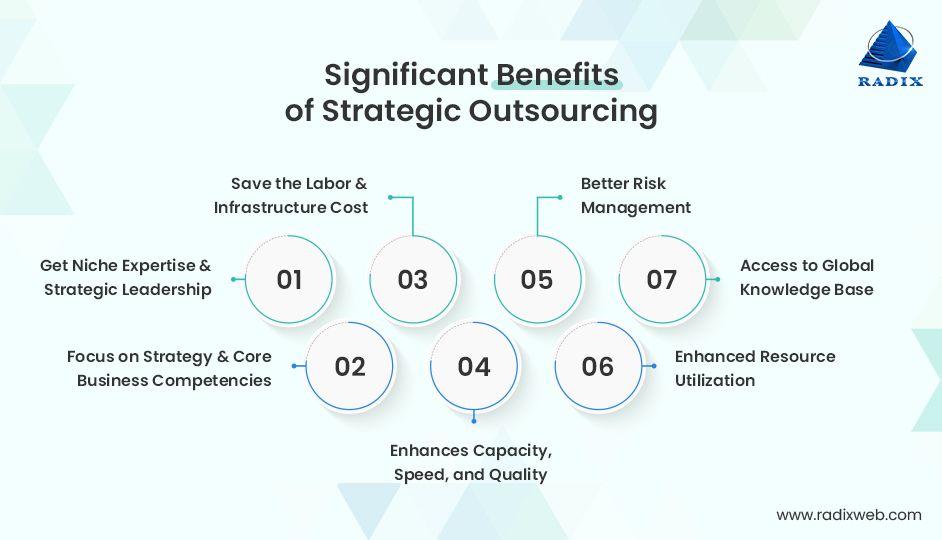
Think of a distributed talent network as a living toolkit: each external partner is a calibrated instrument that, when orchestrated, reproduces the velocity and cohesion of an in-house team without the payroll overhead. Smart founders build a partner playbook that codifies selection criteria, outcome-based SLAs, and handoff rituals so that every engagement is measurable and repeatable.key habits that separate chaos from choreography include:
- Transparent value metrics – scorecards that focus on outcomes, not hours.
- Single-source accountability - one owner per outcome to prevent finger-pointing.
- Shared knowledge hubs – living docs and templates that onboard new partners instantly.
- Regular cadence - short, frequent syncs to catch drift before it compounds.
Operational governance turns a scattering of specialists into a resilient, scalable engine: clear escalation paths, blended budgets, and periodic health checks keep risk manageable while preserving agility. Treat partnerships as productized services with roadmaps and versioning-this reduces surprises and enables confident scaling. A compact governance snapshot can help align expectations at a glance:
| Partner type | Primary KPI | Sync Cadence |
|---|---|---|
| Engineering | Deployment velocity | Weekly |
| Growth Marketing | Lead quality | Biweekly |
| Customer Success | CSAT | daily |
Automation and Orchestration Stack: Choosing Tools, Workflows and Governance for Reliability

The secret to a zero-employee scale-up is making the stack do the work of a team: pick composable, observable building blocks that expect failure and heal themselves. Favor serverless and containerized runtimes, GitOps-driven CI/CD, and policy-as-code so every deployment is a deterministic transaction. Prioritize tools that expose clear telemetry-logs, traces, and metrics become the product managers and on-call engineers; automated remediation and runbooks become the HR and ops playbook. Good governance is lightweight but enforceable: automated audits, RBAC, and cryptographic secrets keep drift and risk in check while letting the stack operate autonomously.
- Serverless & Containers – scale with cost predictability
- GitOps – declarative desired state, auditable changes
- Policy-as-Code – automated guardrails and compliance
- Observability – detect, triage, trigger remediation
- Automated Runbooks - playbooks executed by the system
| Layer | Example | Why it matters |
|---|---|---|
| Compute | Cloud Run / Lambda | Instant scale, pay-per-use |
| Orchestration | ArgoCD / Flux | Git-as-single-source-of-truth |
| Observability | Prometheus / Datadog | Automated detection + alerts |
Workflows must be idempotent and event-driven so the system can retry, roll back, or promote changes without human arbitration; feature flags and canary releases let the stack experiment safely while automated rollbacks limit blast radius. Governance should be encoded where humans rarely touch it: quotas, rate limits, automated compliance checks, and scheduled chaos tests that validate recoverability. When these elements are combined-clear ownership by code, machine-executable policies, and resilient workflows-the technology stack effectively becomes the founding team, reliably growing the business without a traditional headcount.
Legal,financial and Trust Frameworks: contracts,Compliance and Risk Controls Without Payroll
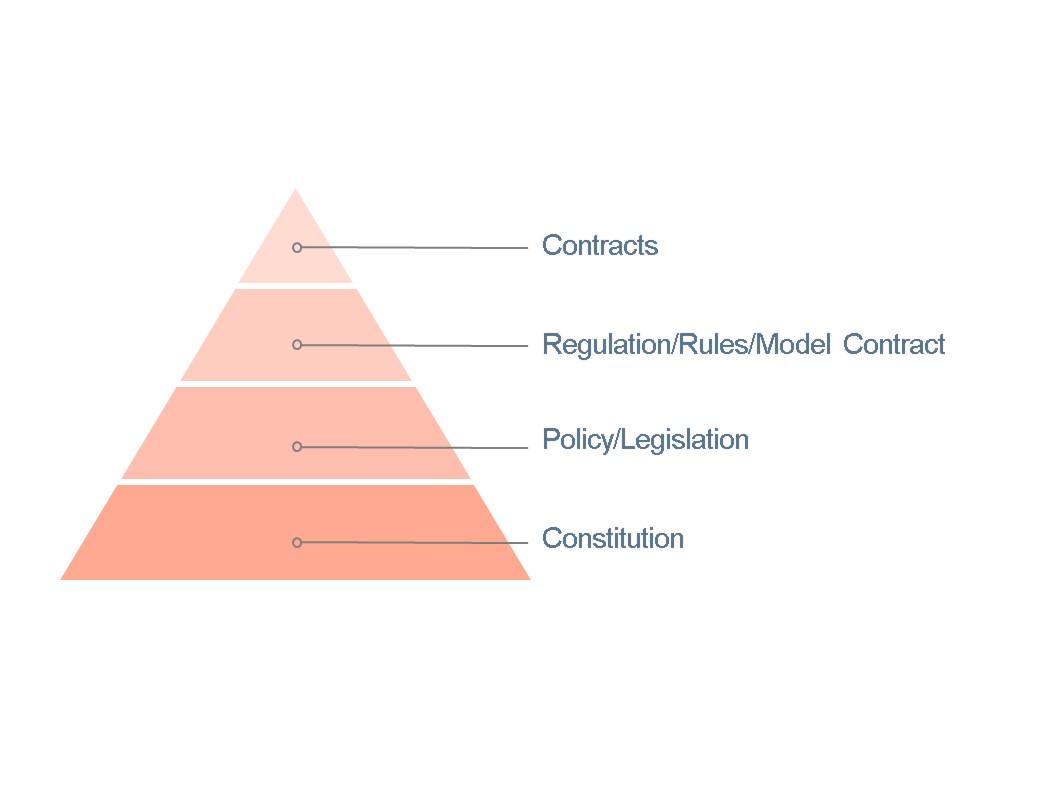
Startups that scale with zero employees treat legal scaffolding as product infrastructure: every relationship is codified, every outcome is guaranteed by contract rather than payroll. They lean on master services agreements, work-for-hire and IP assignment clauses, and narrowly scoped service-level agreements that translate expectations into measurable deliverables. by designing modular contracts-fixed-fee gigs, milestone payments, and clear dispute-resolution paths-they convert intangible trust into enforceable terms that move faster than traditional hiring cycles.
| Contract Type | Primary Goal | Rapid Control |
|---|---|---|
| fixed-fee Contractor | predictable costs | Milestone escrow |
| Revenue-share Partner | Scale with demand | Automated payouts |
| Platform Licence | Protect IP | Access tokens |
Compliance and risk controls are orchestrated through lightweight automation and third-party trust anchors: automated KYC/KYB, privacy-first data maps (GDPR/CCPA ready), and insurance or escrow mechanisms that replace the safety a payroll system provides. Rather than assembling an HR team to police every box,these startups codify controls into onboarding flows,payment rails and vendor scorecards-so risk reduction happens at the edges,continuously. The result is a nimble legal and financial engine that keeps liability contained while enabling rapid, decentralized growth.
A Practical Playbook to Launch and Scale Without Employees: Metrics,Contracts and growth Experiments

Think of the startup as a composable machine: clear, measurable inputs (traffic, activation, conversion), contractual connectors (short-term, outcome-focused agreements with specialists), and rapid experiments that iterate on one variable at a time. By decoupling work into discrete, documentable contracts you convert human tasks into predictable, repeatable APIs - and that predictability lets you automate orchestration and replace headcount with reliable external capacity.
- key metric: one leading indicator per funnel stage
- Contract form: outcome + timebox + escrowable milestone
- Experiment rule: run n=3 small tests before scaling
Execution becomes a loop of measure, hire-on-demand, and optimize: instrument what matters, hire a specialist for a single experiment, evaluate against your compact SLAs, and either rollback or scale the playbook. Use marketplaces, embedded payments, and automated reporting to keep coordination friction low; treat every repeatable process as a potential product that can be tuned, templatized and sold back into the ecosystem.
- Scale trigger: 20% lift sustained across 2 cycles
- Governance: short contracts + standardized KPIs
- Resilience: diversify vendors and automate handoffs
Wrapping Up
Whether by stitching together APIs, outsourcing creative work to a global gig economy, or letting autonomous systems handle orchestration, the startups that grow without salaried headcount show that scale can come from composition as much as from hiring. That model prizes modularity, leverage and low fixed costs, but it also exposes founders to new forms of complexity: legal and compliance questions, quality control, and the fragility of networks they do not fully own.
Seen neutrally, zero-employee startups are neither a panacea nor a passing fad. They are a pragmatic configuration that fits certain products, markets and founder goals – especially when speed, capital efficiency and extreme focus matter more than building a bespoke internal culture. As tooling and platforms continue to mature, expect more experiments in this space, along with renewed debate about responsibility, sustainability and who benefits.Ultimately, whether you view them as elegant systems or brittle constructs, these ventures expand the vocabulary of entrepreneurship.The lesson for builders and observers alike is simple: count capabilities, not heads, and design with both chance and obligation in mind.