


A decade ago,the loudest voice frequently enough won: more impressions,more shares,more reach. Today the market has more signals than attention, and the loudest voice can easily dissolve into background noise. Content that simply travels far without landing where it matters becomes little more than temporary static.
Relevance is the connective tissue that turns an audience into an active audience. It’s less about how many people see a piece of content and more about how well that content fits into their needs, context, and moment.Relevant content invites action, loyalty and meaningful dialog; reach alone can only promise visibility.
This article looks beyond vanity metrics to explain why relevance should be the north star of content strategy. We’ll examine what relevance actually means in practice, why it drives better outcomes than raw reach, and how teams can shift their measurement and production to ensure each message finds the right ears – not just more of them.
Relevance as a Strategy: Why precision beats sheer audience size

Big numbers can be notable, but they’re a poor shortcut for meaningful outcomes. When you focus on quality over quantity, every piece of content becomes a purposeful touchpoint: fewer impressions, higher intent, deeper engagement. That shift turns ephemeral views into measurable actions - lower acquisition costs, stronger loyalty, and creative assets that actually earn attention rather of merely aggregating it.
- Define micro-audiences: segment by need, not demographic.
- Map to intent: match content to the moment a user is most ready to act.
- Personalize context: adapt tone and format to the channel and situation.
- Measure depth: prioritize time, actions, and repeat interactions over raw reach.
- Iterate wiht feedback: treat relevance as a hypothesis to be tested and refined.
When relevance is the strategy, every optimization compounds: a smaller, more precise audience often delivers a bigger business impact because they care, convert, and stay. That kind of resonance is harder to buy than to build – and far more durable than the fleeting glow of sheer reach.
From Vanity Metrics to Actionable Signals: Metrics that prove relevance

Move beyond surface applause – a flood of shares doesn’t guarantee your message landed. Focus on signals that reveal audience intent and attention:
- Time on page – shows attention span and content depth gratitude.
- Scroll depth – indicates whether readers reach key moments or calls-to-action.
- Repeat visits – a clear sign of relevance and habit formation.
- Micro-conversions – newsletter signups,downloads or video completions that map to interest,not just popularity.
These are the metrics that let you iterate with confidence, prioritize topics that build loyalty, and design experiences that convert casual visitors into engaged followers.
| Metric | What it proves | Speedy action |
|---|---|---|
| Time on page | Readers consume your content, not just glance at it. | Test longer formats or add chapter markers. |
| Scroll depth | How far users travel – where interest drops. | move CTAs higher or restructure mid-article hooks. |
| Repeat visits | Content becomes part of a routine. | Introduce serialized pieces or membership perks. |
Turn these actionable signals into a feedback loop: measure, tweak headlines and hooks, and let relevance-not raw reach-drive your content calendar and creative bets.
Intent Mapping and Lifecycle Alignment to drive conversion and retention

Think of your content as a series of answers, not a broadcast: when you map what someone is trying to do at each point in their journey, your messages stop competing for attention and start guiding choices. Focus on the smallest actionable signals – search queries,page behavior,form hesitation - and turn them into content that fits the moment. Use this quick checklist to keep creative work operational and measurable:
- Pinpoint micro-intent – define the immediate question the user needs answered.
- Match format to context – short how-to, comparison chart, case study, or reactivation email.
- Measure the right outcomes – prioritize conversion and repeat engagement over raw reach.
Alignment between customer phases and content types reduces friction and builds loyalty, because relevance creates momentum where reach only creates noise. Below is a compact guide you can paste into editorial briefs to keep teams aligned:
| Phase | Primary Intent | Focus Metric |
|---|---|---|
| Awareness | Discover | New sessions / CTR |
| Consideration | Compare | Engagement / Leads |
| Decision & Retention | choose & Return | Conversion / Repeat rate |
Test, learn, repeat: iterate content snippets and distribution timing against these metrics to turn short-term wins into sustained relationships.
Tailored Distribution and Timing: How personalization amplifies your best content

put your best work in front of the right people at the right moment – not everyone needs the same hook, format, or follow-up. Segment by behavior, habit and intent, then match distribution to those signals: a how-to email for new sign-ups, a short vertical video for mobile-first scrollers, and a long-form guide for returning readers who dwell longer.treat timing as part of the creative brief: delivery windows, cadence and trigger rules should be as deliberate as headlines and visuals.
- Timezone-aware sends – respect local routines
- Channel-fit – serve content where the audience already consumes
- Trigger-based delivery - act on intent, not a calendar
Small distribution shifts produce outsized returns: a 24-hour A/B on send time, a variant that swaps a link-first CTA for an inline excerpt, or a two-step drip for warm prospects can reveal where relevance lives. Build simple playbooks for top segments, measure lift with short experiments, and fold winning timing patterns back into creative briefs so personalization becomes repeatable rather than accidental.
| segment | Best Time | Channel |
|---|---|---|
| New users | Within 1 hour | |
| Mobile-first | Evenings | Social Stories |
Experimentation Frameworks for testing relevance and iterating fast
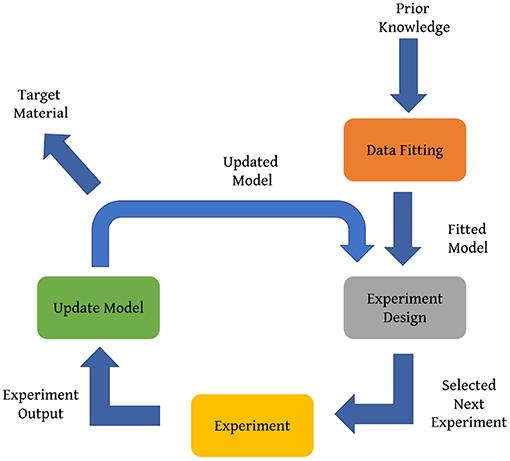
Think like a builder: run tiny, answerable tests that prove whether a piece of content actually resonates with a defined audience.Start with a single, crisp hypothesis-then design experiments that are cheap to run and easy to kill. Use short cycles so you learn before you spend. Key elements to include in every run are:
- hypothesis: What reaction do you expect?
- Variant: Simple change to headline, format, or audience slice
- Metric: One leading signal (time on page, CTR, micro-conversion)
- Duration: 3-14 days, depending on traffic
- Decision trigger: pre-set thresholds for kill/iterate/scale
Built properly, this loop becomes your fastest route to relevance: probe, measure, adapt, repeat. Keep the experiments small so failures are lessons,not losses,and treat winners as hypotheses to scale cautiously-allocate more reach only after clear uplift. A simple cadence table keeps stakeholders aligned and decisions deterministic:
| phase | Goal | When to scale |
|---|---|---|
| Probe | Validate interest | Early positive signal (↑ engagement) |
| Refine | Improve hooks and UX | Consistent lift across segments |
| Scale | Broaden reach | Repeatable ROI |
Measuring Value Over Volume with retention,CLV and engagement depth metrics
When strategy pivots from chasing eyeballs to cultivating relationships, the KPIs change: continuity matters more than one-off clicks.Focus on retention (how many users return), customer lifetime value (CLV) (what each reader or buyer is worth over time) and engagement depth (how deeply people interact with your content). Track signal-rich behaviors that reveal relevance, not just reach – for example:
- Retention rate: repeat visits over 30/60/90 days
- Churn: the percentage of users who drop off after a single visit
- Engagement depth: scroll depth, time on page, and number of interactions per session
- CLV: average revenue or lifetime conversions per user cohort
Quantify the difference between blasting content and building value by comparing surface metrics with meaningful outcomes. Use small, consistent cohorts and A/B tests to measure how changes in relevance move the needle on CLV and retention. A simple snapshot helps teams reorient: examine weekly new-user volume next to three-month retention and average engagement depth – then prioritize what lifts long-term value.
| Metric | Volume-focused | Value-focused |
|---|---|---|
| Primary signal | Pageviews | Repeat visits |
| Typical target | +20% traffic | +15% CLV |
| Action | publish more | Refine content to intent |
Final Thoughts
Reach can fill the room, but relevance opens the door. when your content answers a real question, sparks a small conversation, or nudges a decision, it earns attention that lasts. That kind of attention is harder to measure in raw numbers but far more likely to move people – and your business – forward.
So instead of chasing every eyeball, aim for the ones that matter. Map content to the moments your audience lives in,test what they actually use,and be ready to adapt. Over time, relevance compounds: trust grows, relationships deepen, and reach becomes a byproduct rather than the goal.
content strategy is less about how many see your work and more about what those who do see it think, feel, and do next. Prioritize meaning over magnitude, and your content will earn both influence and endurance.