They do their work in hoodies, not lab coats, but the best founders move like scientists.When a founder sketches an experiment on a whiteboard, splits traffic between two landing pages, or watches a user session for the thousandth time, they’re doing more than product management – they’re applying a disciplined method for discovering what’s true adn what’s merely hopeful.
This isn’t a metaphor to romanticize tinkering. It’s an operational prescription: form a hypothesis, design a test that could prove the idea wrong, collect data, update your beliefs, and repeat. The scientific mindset brings a rigor to uncertainty that pure intuition or charisma cannot replace. It shapes how teams prioritize, how founders allocate scarce resources, and how they interpret the noisy signals of early markets.
Thinking like a scientist also changes how failure is framed. Failed experiments are not calamities but informative data points that shrink the space of the unknown. That outlook keeps founders curious, reduces costly dogma, and accelerates learning – all critical in an environment where time and capital are finite.
In the pages that follow we’ll unpack the habits, tools, and mental models that make a scientific approach practical for startups. From hypothesis-driven product design to reproducible metrics and controlled experiments, you’ll see why the leaders who survive and scale are frequently enough the ones who think in terms of evidence, not anecdotes.
treat Ideas as Hypotheses: map core assumptions, define falsifiable success criteria, and plan minimum viable tests

Start by treating every bright idea like a lab note: sketch the smallest set of beliefs that must be true for it to work, then make those beliefs explicit. Break the thought into three tiny components so you can test them separately-what do we assume about the customer, the value, and the channel? Use rapid, surgical experiments rather than grand launches to learn fast:
- Core assumption: the one belief that would kill the idea if false.
- falsifiable success criteria: a measurable outcome that clearly says pass or fail.
- Minimum viable test: the least effort needed to collect that outcome.
This discipline turns vague optimism into an engine for revelation,not wasted effort.
Design tests that make you decide clearly: every experiment should end with data that forces a change-iterate, pivot, or double down. Plan for quick wins and quick kills by defining timeboxes, sample sizes, and what counts as signal versus noise. A tiny cheat-sheet helps teams move from debate to action; use a compact rubric to keep experiments honest and fast:
| hypothesis | Metric | Pass / Fail |
|---|---|---|
| Users will pay $5/mo | Conversion ≥ 3% | Go / Stop |
| Landing page converts | Click-to-signup ≥ 15% | Iterate / Kill |
| Onboarding retains week 1 | Retention ≥ 30% | Scale / Rework |
keep the experiments short, the criteria public, and the willingness to be wrong fast-those are the habits that make founders think like scientists and build things that actually work.
Design High Tempo Experiments: run rapid, low cost tests to surface real user behavior and avoid costly pivots
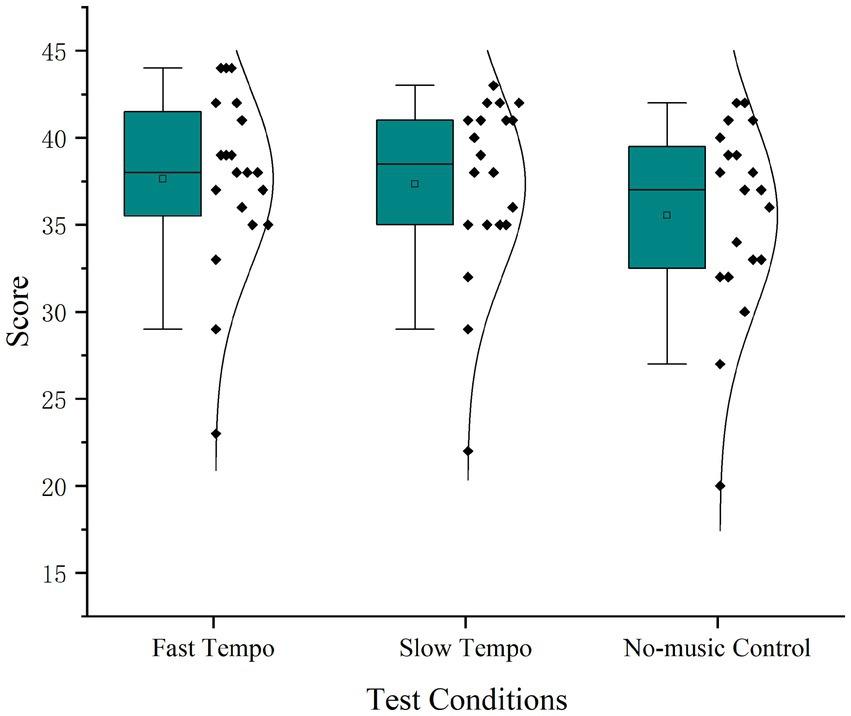
Treat every idea like a mini-lab: instead of grand launches, favor a stream of tiny, focused tests that expose how real people behave when faced with your product or message. Each micro-experiment turns assumptions into measurable outcomes, shortening the time between insight and action. Embrace quick prototypes, clear success criteria, and strict timeboxes so you can learn fast, double down on what works, and kill what doesn’t before sunk costs accumulate.
- isolate the riskiest assumption: test one variable at a time.
- Prototype cheaply: paper mockups, landing pages, or concierge flows work fine.
- Measure behavior, not opinions: clicks, conversions, and repeat actions trump surveys.
- Decide with thresholds: predefine what “win” and “fail” look like.
- Iterate rapidly: small cycles + frequent data beats one big bet.
Make failure informative: a swift negative result is worth ten warm-but-useless opinions as it prevents expensive pivots later. Use clear decision rules to promote winning variants into scaled experiments,and codify learnings so the whole team internalizes what real users do versus what you hoped they’d do.
| Test | Duration | Approx Cost | Primary Signal |
|---|---|---|---|
| Explainer Landing | 3-7 days | low | Click-through rate |
| Concierge MVP | 1-2 weeks | Medium | Repeat usage |
| pricing A/B | 2-4 weeks | Low | Conversion rate |
measure What Matters with Precision: choose leading metrics, build simple tracking, and interpret variance not noise

Pick the few signals that actually steer decisions – not everything that can be measured. The moast effective founders treat metrics like hypotheses: choose a handful of leading indicators (think activation, time-to-first-value, or trial-to-paid conversion) that change before revenue does, and instrument them with simple, reliable tracking. Keep dashboards lean, automate collection, and focus on trends over single-point readings. When a metric jumps or dips, ask “what changed in the system?” rather than reacting to the number itself - because variation often encodes causal clues, not random noise.
Translate variance into experiments and actions by mapping each metric to the smallest,fastest test that could explain it. Use clear ownership and a cadence for review so anomalies turn into hypotheses. Practical examples you can start with today:
- Activation rate – does new user flow show value within the first session?
- Time-to-first-value - how long before users experience the product’s core benefit?
- Trial-to-paid conversion (7 days) – are trial experiences nudging commitment?
- Feature adoption cohort – which releases actually change behavior?
| Metric | Signals | Quick Action |
|---|---|---|
| Activation rate | Onboarding friction | Run a 1-week onboarding tweak |
| Time-to-value | Product clarity | Shorten first-run workflow |
| Trial conversion | Perceived ROI | Test messaging and pricing prompts |
Update Beliefs Relentlessly: use Bayesian thinking to weigh new data and change course when evidence demands it
Treat every assumption as a working model: start with a clear prior, then let data pull you toward the truth. Founders who update their convictions fast think in probabilities rather of slogans - they ask, “Given this new churn number or user interview, how much should I now believe that this feature is worth doubling down on?” This isn’t cowardice; it’s discipline. By treating hypotheses as provisional and measuring the likelihood of observed outcomes, you turn gut feelings into numerical bets you can resize or fold based on evidence. Small,frequent updates beat grand pronouncements because they reduce wasted runway and keep teams aligned with reality.
Make the mechanics simple and repeatable: quantify signals, estimate noise, then move resources where the posterior probability justifies it. Use rituals that force re-evaluation – weekly check-ins with a one-sentence prior, a number, and an updated belief - and train the team to celebrate correct changes of mind as much as successes.
- Collect: instrument the metric that matters.
- Quantify: ask how likely this result is if the hypothesis were true.
- Update: shift effort proportionally to the new posterior.
| Hypothesis | Prior | New Evidence | Posterior |
|---|---|---|---|
| Feature A boosts retention | 60% | Retention +2% SD | 48% |
| Pricing change increases ARPU | 30% | Meaningful uplift | 65% |
Build a repeatable learning Engine: institutionalize experiment logs, structured postmortems, and continuous feedback loops
Treat every idea like a lab experiment: write it down, name the metric that will disprove you, and run fast.A durable learning engine is nothing more than disciplined record-keeping and ruthless follow-through – a living experiment log that everyone can read. inside each entry keep the essentials:
- Hypothesis – what you expect and why
- Primary metric - the signal that matters
- Design & sample - who, what, and how
- Result – measured outcome, with confidence
- learning & next step – what changes because of this
Pair that with tight feedback loops: daily signals for noise, weekly reviews for trends, and immediate customer touchpoints for reality checks. over time the log becomes a map of decisions – not a trophy case – so entries must be terse, timestamped, and linked to owners.
Make postmortems a ritual, not a ritualized blame session: capture root causes, surface assumptions that failed, and translate every insight into an experiment or an operational fix.below is a simple template to institutionalize the cadence and outputs of those reviews:
| Phase | Prompt | Outcome |
|---|---|---|
| Pre-mortem | What could go wrong? | Risk list |
| Postmortem | What happened and why? | Root cause + data |
| Follow-up | Who fixes what and by when? | Action owner & deadline |
Enforce a few simple rules to keep momentum:
- No blame - focus on systems, not people
- Time-box – short, evidence-first discussions
- Action owners – every insight must have a named owner
When logs, postmortems, and feedback loops feed each other, the company stops guessing and starts iterating with intention – the hallmark of founders who think like scientists.
Balance Curiosity with Constraints: prioritize experiments by risk, cost, and learning velocity to scale sustainably

Think like a lab director: every product guess should be a test that returns a clear signal, not just noise. Build a portfolio of experiments so your curiosity doesn’t bankrupt you – favor those that maximize insight per dollar and per day.Use simple heuristics to sort work: estimate downside if an experiment fails, tally direct and chance costs, and measure learning velocity (how fast you can turn results into decisions).
- Cheap probes – validate assumptions with landing pages, ad tests, or concierge onboarding.
- Scaled pilots - deploy to a subset once signals are strong enough.
- Moonshots – fund sparingly, only when runway and stakes justify the risk.
Keep a small, readable scoreboard of experiments and treat it like a chemistry table: every row is an actionable hypothesis.
| Experiment | Risk | Cost | Learning Speed |
|---|---|---|---|
| Ad creative split | Low | Low | Fast |
| Concierge onboarding | Medium | Medium | Fast |
| New core feature | High | High | Slow |
Use this table to decide what to kill, double down on, or pause – kill fast, iterate faster, and scale only the experiments that deliver repeatable learning within your resource constraints.
In Retrospect
Think of the startup as a messy laboratory: problems are hypotheses, customers are instruments, and every product release is an experiment that either refines the model or sends you back to the bench. The best founders treat that mess not as chaos to be tamed by bravado, but as evidence to be collected, interrogated and woven into a better theory of the business.
This scientific posture is less about credentials and more about habits – asking better questions, designing cheap tests, measuring what matters, and changing your mind when the data point the other way. It preserves curiosity without surrendering rigor, and it turns failure into information rather than final judgment.
building a company is an iterative inquiry into an uncertain world. Adopt the scientist’s modesty and methods, and you give your ideas the one thing they need to grow: a reliable way to tell whether they’re true.