


The first few interactions a customer has with your product are not just a set of tasks to check off – they are the opening scene of a long story. Like a well-directed first chapter, onboarding sets expectations, establishes rhythm, and signals whether the relationship that follows will be effortless cooperation or a slow drift toward indifference. As those opening moments shape how customers perceive value, they quietly influence every dollar the customer will spend over their lifetime.
Onboarding is where promise meets practice: it turns marketing promises into usable features, translates brand language into real outcomes, and either clears the path to ongoing engagement or creates friction that speeds up churn. Small choices – how clearly you explain benefits, how quickly users reach that “aha” moment, how supported they feel - compound over time. The result is not just a short-term activation metric but a predictable influence on retention,expansion,and advocacy.
This article explores why onboarding deserves to be treated as a strategic investment in lifetime value.We’ll look at the mechanisms that link first impressions to long-term behavior, common missteps that undercut future revenue, and practical ways to design an onboarding experience that increases the odds a customer stays, grows, and recommends.
Why onboarding determines lifetime value: tie early wins to long term engagement through measurable activation points and accountable owners
The first days of a customer’s journey set the tone for years of value – small, measurable victories compound. Map your activation points to tangible signals (time-to-first-success, feature adoption rate, repeat action) and measure them relentlessly so you can predict retention and revenue. Early wins should be framed as short experiments: each win must have a clear metric, a hypothesis, and a follow-up action that nudges the user toward habitual use. Consider these simple activation moments as the spine of your growth strategy:
- First meaningful action – (Metric: completed core task within 24h)
- Value realization – (metric: user reports or reaches X outcome)
- Habit formation – (Metric: 3+ sessions in 7 days)
Assign accountable owners for each activation point so responsibility and feedback loops exist. The table below shows a compact operating model you can copy into a product or success playbook.
| Activation Point | Key Metric | Accountable owner |
|---|---|---|
| First meaningful action | Time-to-first-success | Onboarding PM |
| Value realization | Outcome completion rate | Customer Success |
| Habit formation | 7-day retention | Growth Lead |
Design a time to value roadmap that accelerates success and cuts churn: prioritize essential tasks, automate repetitive steps, and set clear milestones
Map the shortest path from signup to the customer’s first win and strip away everything that doesn’t move the needle.Start by prioritizing ruthlessly: identify the handful of actions that deliver value fastest and make them impractical to miss. Implement automation for repetitive handoffs-welcome emails, permission checks, and setup scripts-so your team can focus on guiding customers through meaningful decisions.
- Core setup: single-screen account and permissions
- first success: the smallest task that proves value
- Instrumented guidance: inline tips and auto-config
Turn those steps into measurable checkpoints so you can iterate on what actually reduces attrition. Define short, observable milestones, tie them to concrete triggers, and automate nudges when customers stall-bot reminders, in-app tooltips, or scheduled touchpoints. Use simple metrics to keep teams aligned: activation rate, time-to-first-value, and 30-day retention.
- Day 0: Prosperous signup + welcome flow
- Day 7: First meaningful outcome achieved
- Day 30: habit formation or repeat use
Personalize onboarding journeys for high value segments with data informed triggers, adaptive content, and role specific playbooks

Treat high-value cohorts like the VIPs they are: map their motivations, then let real-time signals open the right doors. when a usage spike, product milestone, or billing event occurs, data-informed triggers should nudge recipients into tailored paths where content adapts to behavior and minute needs. Small, role-specific playbooks remove guesswork-sales leads see adoption-focused prompts, engineers get technical deep dives, and executives receive ROI snapshots-so each interaction feels deliberate and earned.
- Trigger: First power-user action → send advanced setup guide
- Adaptive content: Behavior-based tooltips that evolve with use
- Playbook: Role checklist for onboarding calls and follow-ups
Personalization pays off in measurable lifts: shorter time-to-value, higher feature adoption, and longer-lived customers. build small experiments into every playbook, instrument outcomes, and iterate-A/B testing, cohort analysis, and qualitative feedback should all inform the next version of the journey. use these swift checks to keep the experience relevant and scalable, ensuring each high-value segment converts attention into loyalty.
- Metric: Time-to-first-success
- Metric: 30/90-day retention by segment
- action: Update playbook monthly based on learnings
Create feedback and rescue loops to recover at risk customers: instrument behavior signals, enable proactive outreach, and deliver contextual help

Start by treating every click, pause and backtrack as a message: instrument product telemetry so you can translate behavior into a live health score.Capture signals such as time-to-first-success, feature drop-off points, and repeated error states, then feed them into lightweight rules or a churn-scoring model that flags accounts before they fade. Useful signals to track include:
- Long onboarding sessions without milestone completion
- Rapid decrease in key feature usage
- Multiple support requests about the same task
- negative NPS or unexpected downgrade actions
Turn those signals into clear runbooks so your team knows whether to nudge, assist, or escalate.
Rescue loops are the safety net that turns early warning into revenue preservation: combine automated nudges with human outreach and in-context help to recover at-risk users. Design a tiered response-automated tips and tooltips for quick fixes, targeted in-app messages for behaviour nudges, and high-touch outreach for accounts with high LTV-and measure lift for each action. Example outreach tactics:
- Contextual microcopy and guided tours triggered by stalled flows
- Timed email sequences that reference the exact action the user abandoned
- CSM outreach with session replays and suggested next steps
When these loops are instrumented and continuously tested,small recoveries compound into noticeably higher lifetime value.
Align product, success, and sales around onboarding metrics and handoff protocols to preserve momentum and escalate value
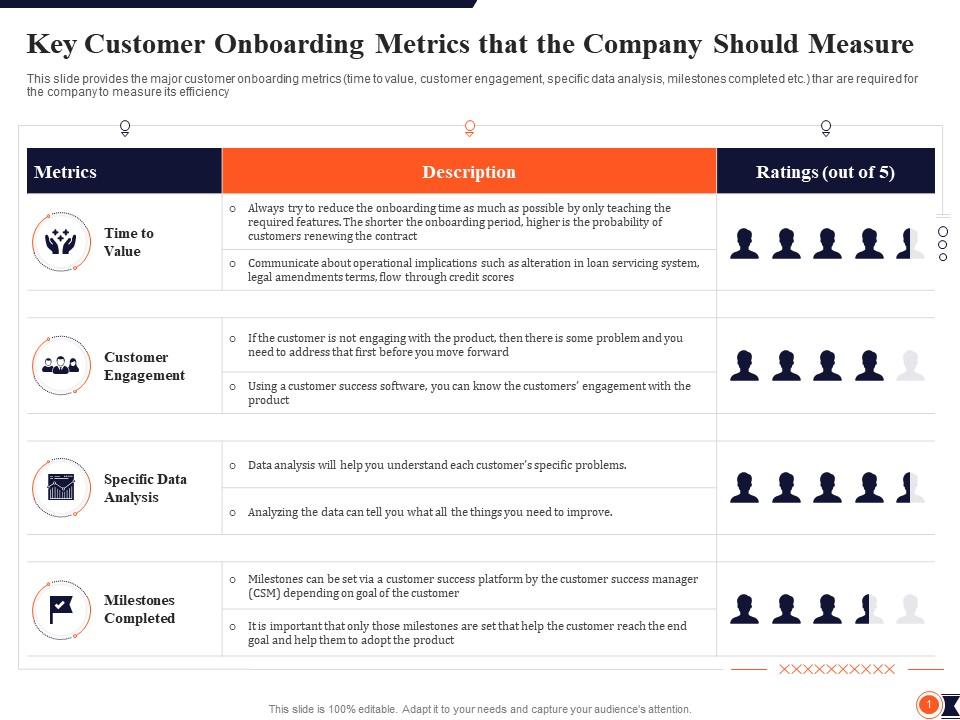
Think of onboarding as a relay: the moment the handoff falters, momentum is lost and value cools. Aligning product, customer success, and sales means everyone watches the same scoreboard – not anecdotes but measurable signals.
- Activation Rate: who completes the key setup within the agreed window
- Time-to-First-Value: how quickly a customer experiences a meaningful win
- Handoff Completeness: whether contextual notes, goals, and risks were transferred
When these metrics are visible and owned across teams, onboarding stops being a department task and becomes a company rhythm that preserves momentum.
Clear, repeatable protocols turn handoffs from hoping into guaranteeing. Documented checklists, automated triggers, and escalation rules make the customer’s journey seamless:
- Context Packets: sales hands over outcomes, expectations, and blockers
- Success Playbooks: CS applies product-validated recipes tied to metric thresholds
- Escalation Triggers: automated alerts when a metric deviates so product can iterate fast
When everyone knows the next move and the metric that defines it, onboarding accelerates value delivery - and lifetime value follows.
Measure, iterate, and scale onboarding improvements using cohort lifetime value, controlled experiments, and a continuous improvement cadence

Think of lifetime value as a thermometer – it doesn’t just tell you whether customers are warm, it shows where to probe for heat. Start by slicing your user base into cohorts by acquisition week or first-experience path, then track retention curves and revenue per user over 7, 30 and 90 days. Use that data to design small, controlled experiments: A/B test onboarding flows, trial different welcome messaging, and vary time-to-value prompts. Practical signals to watch in each test include:
- Retention uplift at D7/D30
- Activation rate (key action completed)
- ARPU per cohort
- Churn velocity in early life
Run tests with short, repeatable cycles and a clear decision rule - when an experiment reaches statistical significance, bake the winner into the flow and re-run the cohort analysis. Scale improvements by documenting playbooks for successful tweaks and forecasting LTV gains from measured percentage increases. A simple snapshot of how iterative changes compound looks like this:
| cohort | Baseline LTV | after Iteration 1 | % change |
|---|---|---|---|
| Week 1 | $120 | $138 | +15% |
| Week 5 | $95 | $112 | +18% |
| Week 12 | $80 | $92 | +15% |
to sum up
Think of onboarding as the first chapter of a long book: it sets tone, builds trust and decides whether the reader keeps turning pages. When you design onboarding with clarity, relevance and measurable goals, you don’t just activate users – you shape how they use, value and ultimately stay with your product. That’s why small investments in personalization, timing and feedback loop into disproportionately large gains in lifetime value. if you want customers who stick around, treat onboarding not as a checklist but as an ongoing strategic instrument: map it, test it, and let the lessons guide the rest of the customer journey.