
A misplaced comma in a contract, a confusing checkout step, or an app notification that arrives at the wrong hour – these are the small, often unnoticed frictions that shape how we feel about a brand or service. They don’t announce themselves with headlines; they slide into our days, accumulate like static, and quietly nudge us toward irritation or indifference. Yet when someone notices and removes one of those tiny irritants, the effect can be startlingly large: relief, gratitude, and a readiness to stay.
Solving invisible problems is less about grand gestures and more about tuning into the background hum of daily experience. It means anticipating needs before they become complaints, reducing cognitive load, and creating an habitat where people feel understood without having to ask. Those quiet interventions signal competence and care, and over time they turn casual users into loyal advocates.
This article explores why these subtle fixes punch above their weight: the psychology and mechanics behind why people reward ease and foresight, examples of effective invisible problem-solving, and practical ways organizations can start listening for the soft, telling frictions that matter most.
Seeing the unseen: why invisible problems are the true loyalty multipliers
Customers rarely thank you for the obvious; they remember the quiet interventions that stopped small frictions from growing into big grievances. When teams track and neutralize these hidden pain points - the slow-loading widget nobody reports,the confusing confirmation email,the step where users silently drop out – they create unexpected delight and a sense of being understood. That invisible workmanship compounds: each unseen fix is a tiny promise kept,and promises kept add up into durable trust.
- Patch micro-friction before it becomes a complaint
- Anticipate needs with subtle, contextual help
- Use telemetry to fix patterns users can’t articulate
Beyond sentiment, the payoff is measurable: fewer support tickets, higher repeat rates, and more referrals from people who feel respected rather than sold to. The math is simple - a handful of small, invisible improvements can multiply lifetime value because they reduce churn at scale while boosting advocates. Below is a quick sketch of typical unseen fixes and their immediate loyalty effects:
| Unseen Fix | Smart Implementation | Loyalty Effect |
|---|---|---|
| Silent checkout drop-off | auto-save carts + gentle re-engagement | Higher conversions, repeat buyers |
| Unclear onboarding steps | Contextual tips + progress nudges | Faster time-to-value, retention lift |
| Hidden performance lag | Proactive monitoring + lightweight fixes | Perceived reliability, stronger advocacy |
How overlooked friction and unmet expectations silently erode trust and how to spot them
They rarely arrive as a headline problem – more like a hairline crack that widens with every interaction. What feels trivial on day one – a form field that defaults wrong, a shipping expectation that slips by a day, a confirmation email that never arrives – becomes the subconscious ledger customers consult when deciding whether you’re reliable. Micro-friction and expectation gaps accumulate: each small surprise subtracts a little trust until loyalty is just math. Watch for the tiny betrayals that add up, such as: • confusing navigation that makes users second-guess actions
• ambiguous messaging that promises more than it delivers
• intermittent performance that turns trust into luck
spotting these quiet leaks requires curiosity more than dramatic fixes – a pattern-spotting mindset rather than one-off firefighting. Listen to the places where behavior changes and language hardens: abandoned carts, terse support chats, repeated “why” questions in feedback. Use these low-friction diagnostics to triage problems quickly and precisely: • heatmaps and session replays to find hesitation points
• thematic analysis of support tickets to reveal expectation mismatches
• cohort metrics (first-week churn, feature adoption) to quantify invisible decay. Boldly surface the small annoyances, document their frequency, and you’ll turn invisible problems into visible wins.
Practical methods to surface invisible problems using qualitative listening and passive data signals
Think like a detective: combine what people tell you with what their clicks whisper. Start small-micro-interviews, support-chat mining, and contextual diary studies reveal feelings and friction points that analytics never name. Pair those conversations with passive signals such as session replays, heatmaps, error rates, and feature-flag cohorts to catch patterns repeating beneath the surface. Practical entry points:
- One-touch probes - 60-second in-app questions after a critical flow.
- Shadow sessions – observe real users completing tasks without prompting.
- Signal stitching – link support tickets to session replays and product events.
- Slow-burn surveys – NPS + follow-up open text to capture latent concerns.
These methods surface invisible problems early, turning faint complaints into clear, prioritized workstreams that build trust when acted on.
use simple triage to move from insight to impact-map passive signals to quick actions and owners.The table below is a compact playbook you can reuse:
| Passive signal | What it reveals | Immediate action |
|---|---|---|
| High friction drop-off | Confusing UI or performance lag | Run a targeted usability test |
| Repeated error logs | Edge-case breaking flow | Patch + monitor with feature flag |
| Support ticket cluster | Unclear wording or missing affordance | Update copy and add contextual help |
- Triangulate always-one qualitative data point + two passive signals = high-confidence problem.
- Act small, measure-small fixes shipped quickly are the currency of loyalty.
Designing solutions that feel effortless, anticipatory, and worth evangelizing

Craft experiences that melt into daily life – where users barely notice the mechanics as the outcome arrives exactly when it’s needed. Small decisions, like smart defaults and context-aware nudges, become the difference between friction and flow. Designers who study patterns of interruption and anticipation discover a palette of tactics:
- Predictive defaults that reduce repetitive choice
- Microcopy and gentle confirmations that remove anxiety
- Progressive reveal that simplifies revelation
- Graceful fallbacks that preserve trust when things fail
These quietly effective moves build an impression of mastery - not as the product shouts it’s cleverness, but because it spares users effort and rewards them with time and clarity.
When you design for those invisible wins,you also seed the kind of enthusiasm that turns users into champions. Track lightweight signals that correlate with delight and sharing – the little moments that compound into devotion – and prioritize fixes that amplify those signals. Consider this quick reference for what to measure and why:
| Signal | Why it matters |
|---|---|
| Auto-suggest acceptance | Shows anticipation is beneficial |
| Task completion time | Lower time = perceived ease |
| Referral mentions | Real-world endorsement |
Make these tiny, predictable delights the product’s obsession – they translate into retention, referrals, and the kind of quiet advocacy that scales.
Measuring the long tail impact: metrics and experiments that prove loyalty gains
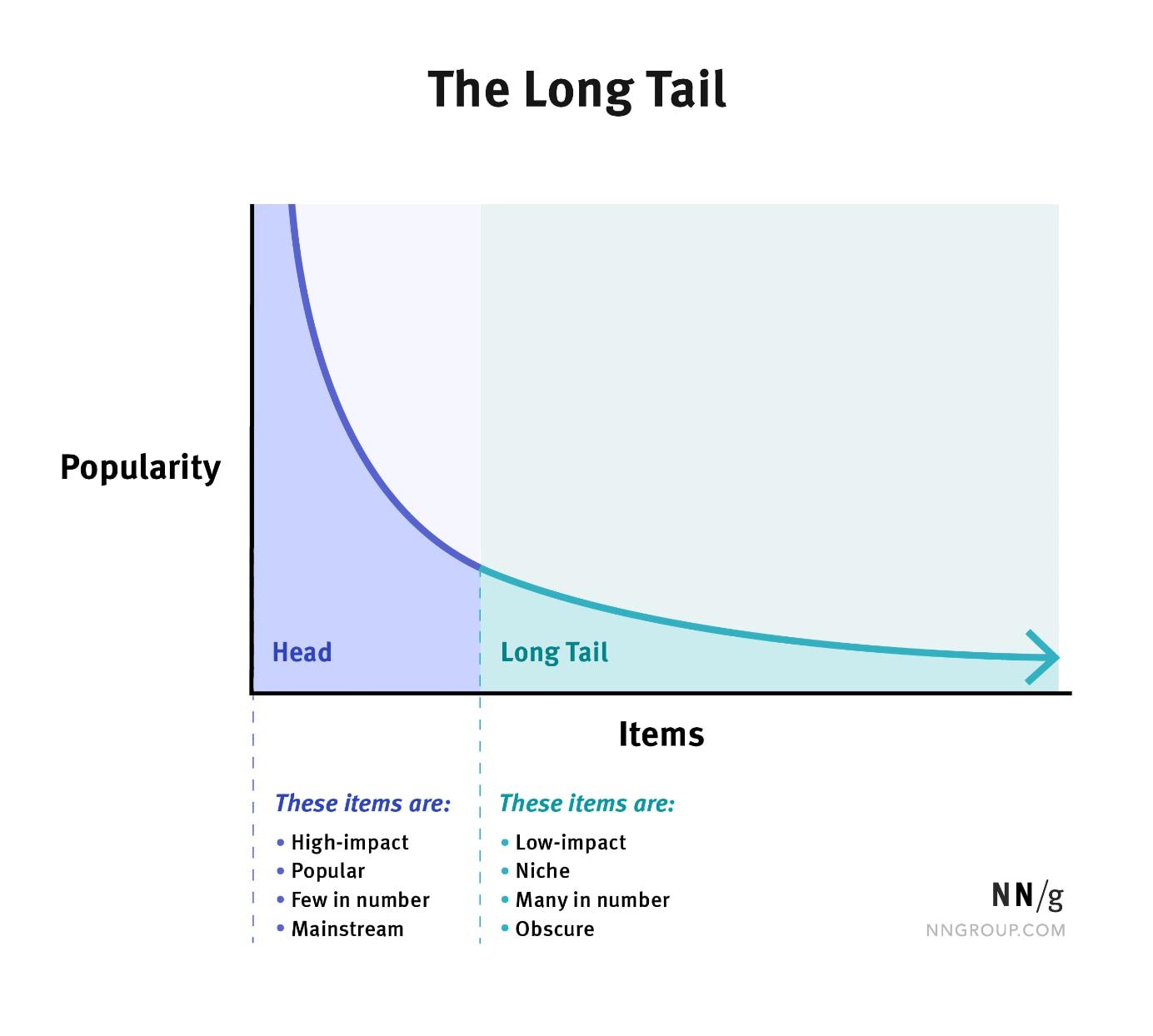
Think of the long tail like an echo chamber: small, invisible wins reverberate over months and become the quiet reason customers stay. To capture that echo you must track beyond vanity metrics – use cohort analysis, customer effort score, and time-to-second-action as yoru north stars. Design experiments with long horizons (90-180 days) and include holdout groups so you can measure persistent lift rather of ephemeral spikes. Practical metrics that reveal true loyalty gains include retention curves, survival analysis of churn timing, and incremental LTV uplift segmented by usage frequency – these show whether a micro-fix turns casual users into habitual advocates.
- Holdout A/B tests with staggered rollouts to detect delayed effects
- Micro-surveys embedded at moments of friction to quantify effort reduction
- Cohort retention at 30/90/180 days rather than day-1 spikes
- Uplift modeling to isolate the causal impact of invisible improvements
run compact experiments that are easy to interpret but long enough to reveal slow-moving loyalty signals: sample sizing should favour power over speed,and analyses should favor life-table or Kaplan-Meier curves to expose when churn risk falls. Small wins often show minimal short-term conversion lift but compound into larger downstream retention – a pattern you can prove with an incremental lift table and a simple survival chart. Pair quantitative tests with qualitative touchpoints (open-ended in-app prompts or follow-up calls) to explain the ”why” behind the numbers and make the invisible visible to stakeholders.
| Experiment | 30‑day lift | 6‑month retention Δ | Note |
|---|---|---|---|
| Invisible bug fix | +1.2% | +6.8% | reduced friction in rare flow |
| Micro‑guidance tooltip | +0.8% | +4.3% | Higher discovery of key feature |
| Contextual onboarding tweak | +2.0% | +9.5% | Better first‑week activation |
- Report cadence: present rolling 90/180 day cohorts, not just weeklies
- Decision rule: prioritize fixes with high retention ROI even if immediate conversion is small
- Storytelling: combine charts with customer quotes to make long tail impact tangible
Scaling empathy into processes, training, and product roadmaps to make invisible problem solving repeatable
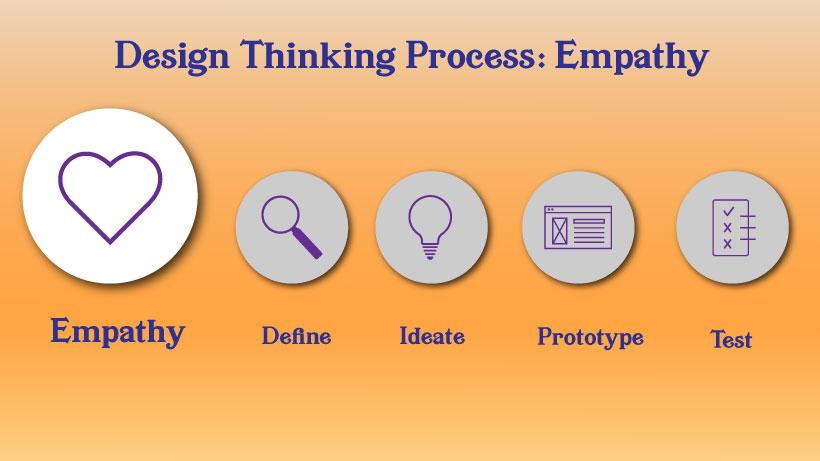
Empathy becomes scale when you stop treating it as a feeling and start treating it as a system. Build repeatable rituals that surface the quiet frictions customers live with every day: curate a signal catalog from support transcripts, stitch it to journey maps, and bake those insights into daily standups and sprint gates. Make these actions obvious by documenting them in playbooks so new hires don’t have to rediscover what made long-time customers feel seen. Practical steps include:
- Signal cataloging (tags, urgency, frequency)
- Empathy archetypes (short personas tied to real quotes)
- Response playbooks (templated but flexible steps)
- Handoff checklists between product, support, and design
These are the gears that convert one-off acts of care into organizational muscle.
When product roadmaps and training programs lean on those gears, invisible problem solving becomes measurable and investable. Prioritize experiments that prove low-friction wins, train teams on detection patterns, and set KPIs that reward early detection rather than just ticket closure. Aligning roadmap bets to loyalty signals-retention, NPS lift, and referral velocity-keeps empathy from being a nice-to-have and turns it into a core business lever. Quick reference:
- Embed empathy metrics in PRDs and sprint reviews
- Run shadowing sessions as part of onboarding
- Reward fixes that eliminate recurring invisible work
| activity | Repeatable Artifact | Loyalty Signal |
|---|---|---|
| Support pattern discovery | Signal catalog | Lower repeat tickets |
| User shadowing | Archetype notes | Higher retention |
| Small UX fixes | Patch roadmap | More referrals |
Keep the loop tight: discover, codify, train, ship-so solving what users didn’t know to name becomes a predictable part of how you build value.
In Retrospect
Invisible problems are the quiet currents beneath every customer interaction – small frictions, unmet expectations, doubts that never make it to the support inbox. When a product,service,or team spots and smooths those currents,it does something harder than delighting with spectacle: it builds trust through consistency,competence,and care. That trust compounds into loyalty not because customers were dazzled, but because their lives were made just a little easier in ways they didn’t have to ask for.
Turning this insight into practice means shifting attention from the obvious to the overlooked: watch real behavior,listen for what’s unsaid,map touchpoints where people hesitate,and design solutions that vanish into people’s routines. Measure impact not only by applause but by reduced friction,higher retention,and the quiet referrals that come when people stop complaining and start recommending.Solving invisible problems is less about heroics and more about thoughtful systems that respect time, attention, and dignity.
If you leave the article with one takeaway, let it be this: loyalty is earned in the margins. The work of noticing and removing what people barely notice is slow, often invisible, and ultimately transformative. Start small, iterate consistently, and let the quiet accumulations do the rest.